Need to Know About Thailand Currency
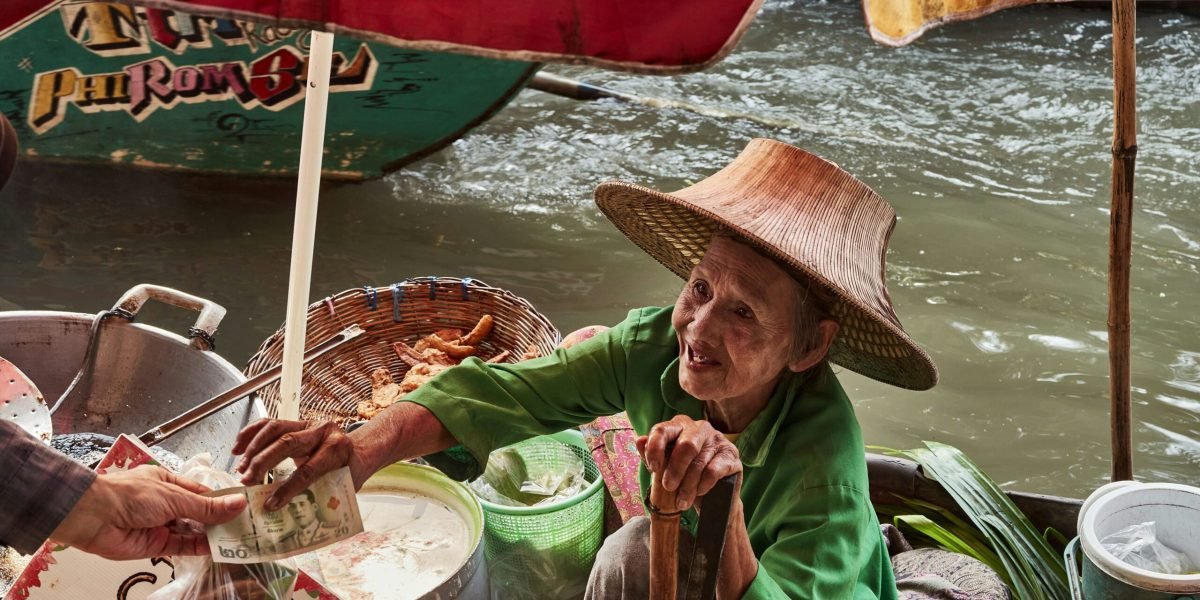
Need to know about Thailand Currency when you meet an elderly woman at a floating market exchanging food for cash with a smile. Norbert Braun / Unsplash
When planning a trip to Thailand, understanding the local currency is not just a financial necessity; it’s a key part of immersing yourself in the culture. The official currency of Thailand is the Thai Baht (฿ or THB), and it’s deeply woven into the everyday lives of locals, from vibrant floating markets in Bangkok to serene temples in Chiang Mai.
While modern Thailand is increasingly card-friendly, cash still reigns supreme in many areas, especially rural towns, street stalls, and local transport. Beyond just knowing the exchange rate, travelers should be aware of how currency is used, where to exchange money safely, the cultural respect tied to banknotes featuring the king’s image, and the budgeting nuances that can greatly influence your experience.
That’s everything you need to know about Thailand currency.
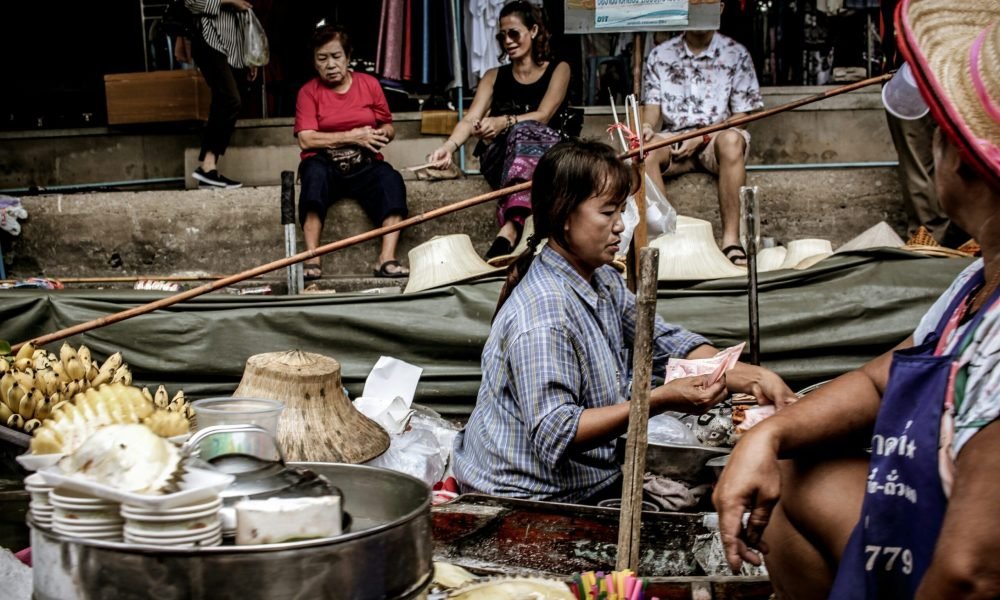
A vendor at a bustling floating market handling Thai baht while selling goods. Frida Aguilar Estrada / Unsplash
1. Baht Basics: Getting to Know Thailand’s Official Currency
The Thai Baht, symbolized as ฿ and coded as THB, is the official currency of Thailand and plays a significant role not only in the country’s economy but also in its cultural identity. The term “baht” has ancient roots, originally used as a unit of weight for silver, and it later evolved into the name of the national currency.
Today, the Thai baht is available in a variety of coins and banknotes, each showcasing elements of the country’s heritage and monarchy. Coins come in denominations of 1, 2, 5, and 10 baht, while banknotes are issued in 20, 50-, 100-, 500-, and 1,000-baht values.
These notes are not only functional but also artistic, featuring detailed designs that reflect Thailand’s rich history, royal traditions, and national pride. Most notes prominently display the portraits of King Rama IX (Bhumibol Adulyadej) or the reigning monarch, King Rama X, serving as a constant reminder of the deep respect Thai people hold for their royal family.
A unique and culturally important fact about Thai currency is that it bears the image of the king, which makes stepping on a coin or banknote considered highly disrespectful and even illegal. In Thai culture, the monarchy is deeply respected, and any perceived defacement of the king’s image, including placing a foot on a fallen banknote or coin (which may happen unintentionally), can lead to fines or more serious consequences.
This is why travelers are advised to treat Thai currency with care and never use their feet to stop a rolling coin or pick up a bill, as such actions can offend locals and violate Thai laws that protect the dignity of the monarchy.
2. Money Exchange in Thailand: Dos and Don’ts
Exchanging money in Thailand can be straightforward if you know where to go and what to watch out for. Airports may give convenience, especially after a long flight, but they typically have less favorable exchange rates compared to other options. For the best value, it’s advisable to use local exchange kiosks in city centers, particularly well-known ones like Superrich (in both orange and green branding), which are trusted by locals and travelers alike for competitive rates and transparency.
Banks are a reliable place to exchange currency in Thailand, but they typically give less competitive rates and may include a transaction fee. Avoid street exchangers and unlicensed kiosks, as they often scam travelers or deal in counterfeit notes. Verifying the amount and authenticity of received cash immediately is essential, particularly in tourist-heavy areas.
3. Cash vs. Card: What Do Locals Prefer?
In Thailand, cash remains the most widely accepted form of payment, especially in local markets, for tuk-tuk rides, and at temples. Street vendors, small shops, and many forms of public transportation often only accept cash, so having enough Thai baht on hand is essential for convenience.
However, debit and credit cards are increasingly accepted at larger establishments like hotels, shopping malls, and chain restaurants. Grab Rides, the popular ride-hailing service, also supports card payments, making it easy to get around in cities like Bangkok.
For a more modern, cashless experience, UPI (Unified Payments Interface) and QR code payments have become increasingly popular in Thailand. Travelers can easily make payments via QR codes at various shops, restaurants, and even some street vendors, using mobile banking apps or Thai mobile wallets like TrueMoney, Rabbit Line Pay, and AirPay.
These payment methods are convenient, quick, and often give better exchange rates for international cards. However, despite the rise of mobile payments, cash remains crucial for many small transactions, particularly in rural areas or with smaller vendors. It’s a best idea to carry both cash and cards to ensure you’re prepared for any situation while traveling in Thailand.
4. How Much Baht Is Enough? Daily Budgeting in Thailand
Your daily budget in Thailand varies based on your travel style, whether you’re on a tight budget or indulging in luxury. For a budget traveler, you can comfortably manage with around 1,000 to 1,500 THB per day. It includes staying in budget accommodations like hostels, enjoying affordable street food, and using public transport.
Street food is one of the best bargains in Thailand, with meals ranging from 30 to 100 THB. Public transportation is also inexpensive, with buses and the BTS Skytrain in Bangkok costing between 10 and 50 THB. For tuk-tuks or motorbike taxis, fares typically range from 50 to 150 THB, depending on the distance and negotiation skills.
For a luxury traveler, a daily budget can rise significantly, ranging from 4,000 to 10,000 THB or more. This would cover stays in high-end hotels or resorts, fine dining, private transportation, and organized tours. Entry tickets to attractions like temples, museums, or theme parks typically cost between 100 and 500 THB, though special tours or experiences (like river cruises or shows) can go up to 1,000 THB or higher.
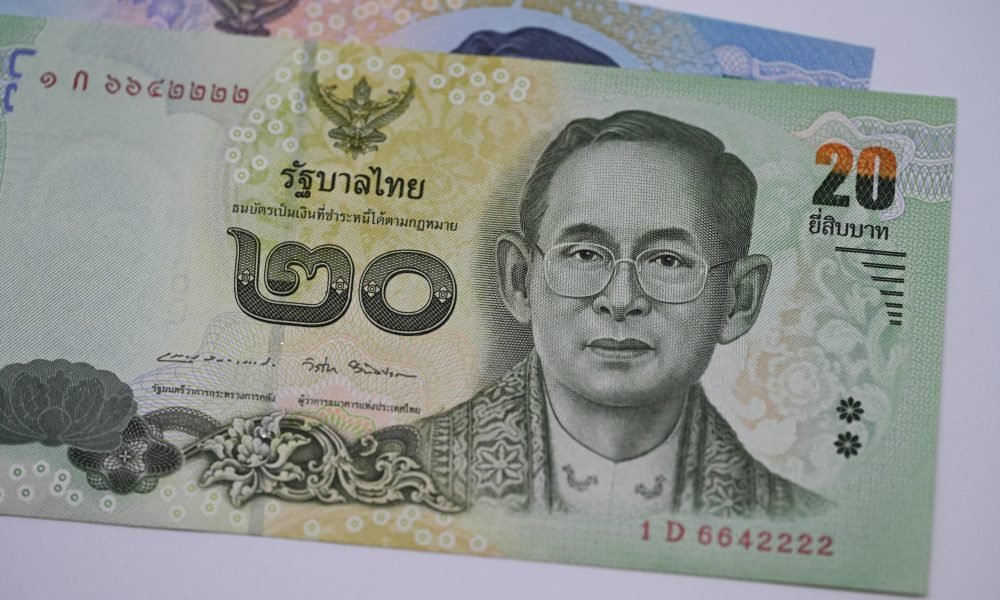
A close-up of a 20 Thai baht (Thailand Currency) banknote featuring King Bhumibol Adulyadej. Luoqing / Pexels
5. Currency Conversion: Real-time Tools and Apps
When traveling to Thailand, using real-time currency conversion apps can help you stay on top of the latest exchange rates and avoid confusion. Apps like XE Currency, Revolut, and Currency Converter Plus let you track live rates and convert currencies instantly, whether you’re online or offline.
These tools are especially useful when you’re out exploring, ensuring you make smart choices when exchanging money or shopping. For those using international cards, apps like Wise (formerly TransferWise) can offer better exchange rates and lower fees compared to standard bank conversions, making it a cost-effective option for managing your money abroad.
However, travelers should avoid using dynamic currency conversion (DCC) at ATMs or points of sale. DCC allows you to pay in your home currency instead of Thai baht, but this option often comes with hidden fees and poor exchange rates. It may seem convenient at first, but the actual cost is usually higher than paying in local currency. It’s best to opt for transactions in Thai baht to avoid unnecessary charges and get the most favorable rates.
Google Lens allows users to scan and translate Thai currency signs in real time, making it easier to identify banknotes and denominations. This tool is especially helpful for travelers unfamiliar with the Thai language, as it provides instant translations by simply pointing a smartphone camera at the currency. It helps prevent confusion and reduces the risk of mistakes when handling or exchanging money in Thailand.
6. The Hidden Stories Behind Thai Banknotes
Thai banknotes are more than just currency—they’re windows into the country’s rich history, culture, and monarchy. Each denomination features portraits of Thai kings, most commonly King Rama IX (Bhumibol Adulyadej) and King Rama X (Maha Vajiralongkorn), along with imagery that reflects Thailand’s heritage.
The back of the 20-baht Thai banknote features King Rama I, the founder of Bangkok, while other denominations display images of famous temples, national landmarks, and important royal events. These design elements are rich in symbolism, reflecting Thailand’s deep respect for its monarchy, Buddhist traditions, and cultural heritage.
Over time, the design of Thai banknotes has changed to include advanced security features such as holograms, color-shifting ink, and watermarks to prevent counterfeiting. These updates also reflect changes in Thailand’s leadership, with newer series issued under King Rama X featuring his portrait and revised design themes, replacing those of King Rama IX.
Travelers might also come across commemorative banknotes, which are occasionally issued to mark royal birthdays, anniversaries, or national milestones. These notes often have unique designs and higher sentimental or collectible value, making them cherished souvenirs for those interested in Thai history and culture.
7. Arriving in Thailand: Should You Bring USD or Convert Locally?
When landing in Thailand—whether at Suvarnabhumi Airport or Don Mueang Airport—you’ll find currency exchange booths readily available, but their rates are usually less favorable compared to city centers. It’s advisable to exchange just enough Thai baht at the airport to cover initial expenses like transport, SIM cards, or snacks. The best foreign currencies to bring for exchange are USD, EUR, GBP, or JPY, as they typically offer the most competitive rates across Thailand.
Locals and seasoned travelers often suggest using independent money exchange services in the city, such as SuperRich or Vasu Exchange, which give significantly better rates than banks or airports. Another helpful hack is to check online rates in advance and avoid exchanging money on weekends or public holidays when margins may widen.
Additionally, always decline dynamic currency conversion (DCC) when paying with an international card—opting to pay in Thai baht gives you better control over exchange rates and avoids hidden fees.
8. Currency Rules: What Not to Do with Thai Baht
Thailand enforces strict respect for its currency because Thai baht banknotes feature images of the royal family, particularly the king, who holds a highly revered position in Thai society.
Defacing, tearing, or stepping on Thai banknotes is considered disrespectful and even illegal, as it’s seen as an insult to the monarchy. This includes accidentally stepping on a note to stop it from blowing away, which can result in fines or even legal action.
When it comes to bringing baht into or out of Thailand, travelers are allowed to carry up to 50,000 THB per person when leaving the country. However, if you’re traveling to neighboring countries like Laos, Cambodia, Myanmar, Vietnam, or Malaysia, the limit increases to 500,000 THB.
For any amount over 20,000 USD (or its equivalent) entering or exiting the country, you must declare it to Thai customs authorities to comply with anti-money laundering regulations. It’s important to follow these rules to avoid complications at the airport and ensure a smooth travel experience.
9. Emergency Money Tips: Lost Wallet or Card Abroad?
If your wallet or card goes missing in Thailand, take immediate action to protect your finances. Start by calling your bank to freeze or cancel your card and stop any fraudulent activity. Most major banks have round-the-clock support. Next, report the loss to the nearest Thai police station to get an official document, which may be required for insurance claims or when seeking help from your embassy. Taking swift steps can help you stay safe and regain access to funds faster during your trip.
If you’ve lost your passport along with your money, contact your country’s embassy or consulate for support; they can help issue a temporary travel document and advise on accessing funds. For quick cash in emergencies, services like Western Union or MoneyGram allow family or friends to send you money within minutes, which you can pick up at hundreds of locations across Thailand, including banks and convenience stores.
Some travelers also rely on digital wallets or backup cards stored securely online to access emergency funds. Being prepared with copies of important documents and a backup payment method can make a major difference in stressful situations.
10. Spending Smarter: How to Stretch Your Baht While Traveling
Traveling in Thailand can be incredibly affordable if you know where to look for value. Discount apps like Klook, Traveloka, and Grab often give deals on attractions, transport, and food, helping tourists save on common expenses. Many local businesses also provide special rates for tourists, especially when booking online in advance.
When it comes to shopping, markets are far more budget-friendly than malls. Places like Chatuchak Weekend Market or local night bazaars offer souvenirs, clothes, and street food at prices that are often negotiable, unlike fixed prices in upscale shopping centers.
To make your baht go even further, explore free or low-cost attractions such as Bangkok’s temples, local festivals, public parks, and scenic viewpoints. Cities like Chiang Mai, Pai, and Krabi give budget-friendly accommodations and outdoor activities like hiking, swimming, or exploring waterfalls, all at little to no cost.
By mixing smart digital tools with local know-how and a willingness to explore beyond tourist traps, you can enjoy a rich and fulfilling travel experience in Thailand without breaking the bank.
Official Thailand government websites
Everything You Need to Know About Thailand Currency
Bank Of Thailand (BOT) – The official website for information on Thailand’s currency is the Bank of Thailand (BOT), which serves as the country’s central bank.The BOT is responsible for issuing and regulating the Thai baht (THB), including overseeing banknotes, coins, and currency-related policies. https://www.bot.or.th/en/statistics/exchange-rate.html?utm_
FAQs
1. What denominations are available in Thai currency?
Coins: 1, 2, 5, and 10 baht
Banknotes: 20, 50, 100, 500, and 1,000 baht
All banknotes feature Thai kings and cultural symbols.
2. Should I exchange money before arriving in Thailand or after?
It’s usually better to exchange a small amount at the airport for immediate needs and convert larger amounts at local money exchange services like SuperRich in cities for better rates.
3. Can I use credit/debit cards in Thailand?
Yes, cards are accepted in hotels, malls, and restaurants, but cash is preferred in markets, street food stalls, and rural areas.
4. Are digital payments like QR codes or UPI accepted in Thailand?
Yes, QR code payments via Thai mobile wallets are common, and UPI-based apps like PhonePe or Paytm may work at selected places that support international QR interoperability.
5. Is it illegal to step on Thai currency?
Yes. Thai banknotes carry the image of the King. Stepping on or disrespecting currency is considered an insult to the monarchy and is a criminal offense.
6. How much Thai Baht can I bring in or take out of the country?
Up to 50,000 THB can be taken out per person.
Up to 500,000 THB if traveling to neighboring countries.
Amounts over USD 20,000 (or equivalent) must be declared.
7. Where can I check official exchange rates?
You can check official and updated exchange rates at the Bank of Thailand website.
GUIDED BY EXPERT
Yoga within Travel the perfect flow of Experience
Explore wellness in anywhere
by

Explore Related Articles
LEAVE A COMMENT
Error: Contact form not found.