
Bike Ride from Delhi to Ladakh
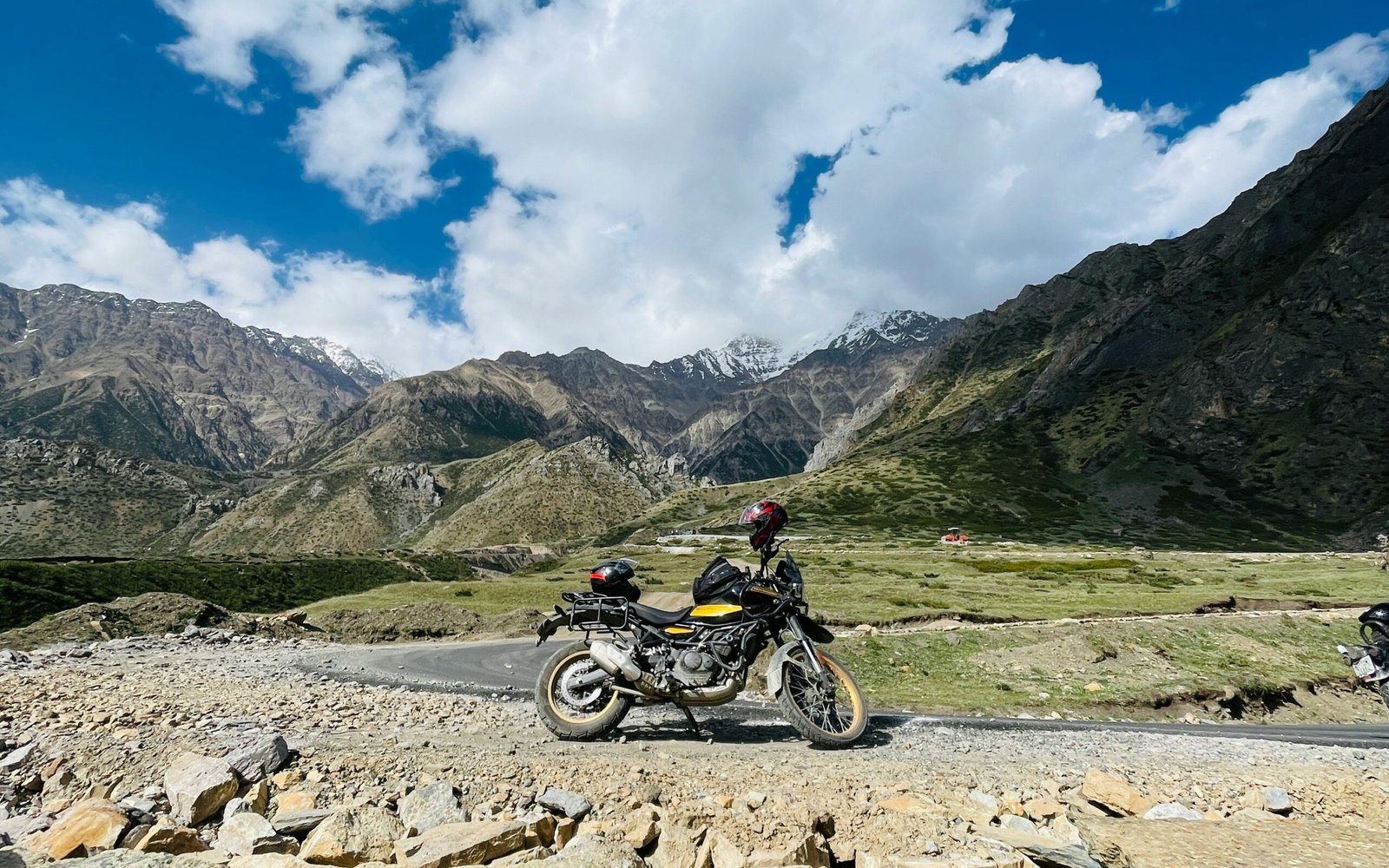
Imagine riding through some of the world’s highest motorable passes, surrounded by soaring peaks and an endless expanse of breathtaking landscapes—that’s the thrill of biking in Ladakh.
A bike ride from Delhi to Ladakh is not just a journey; it’s an exciting adventure that challenges you to tackle tough mountain passes, challenging roads, and changing conditions.
Every turn on the road to Ladakh reveals a new surprise, from snowcapped peaks to deep blue lakes, making it one of the most awe-inspiring rides you’ve ever experienced.
For many, a bike ride to Ladakh is more than just a road trip; it’s the realization of a lifelong dream of conquering the Himalayas on two wheels.
The journey from Delhi to Ladakh tests both your bike and your body. Riding for long hours, especially at high altitudes, can cause fatigue, so planning is important.
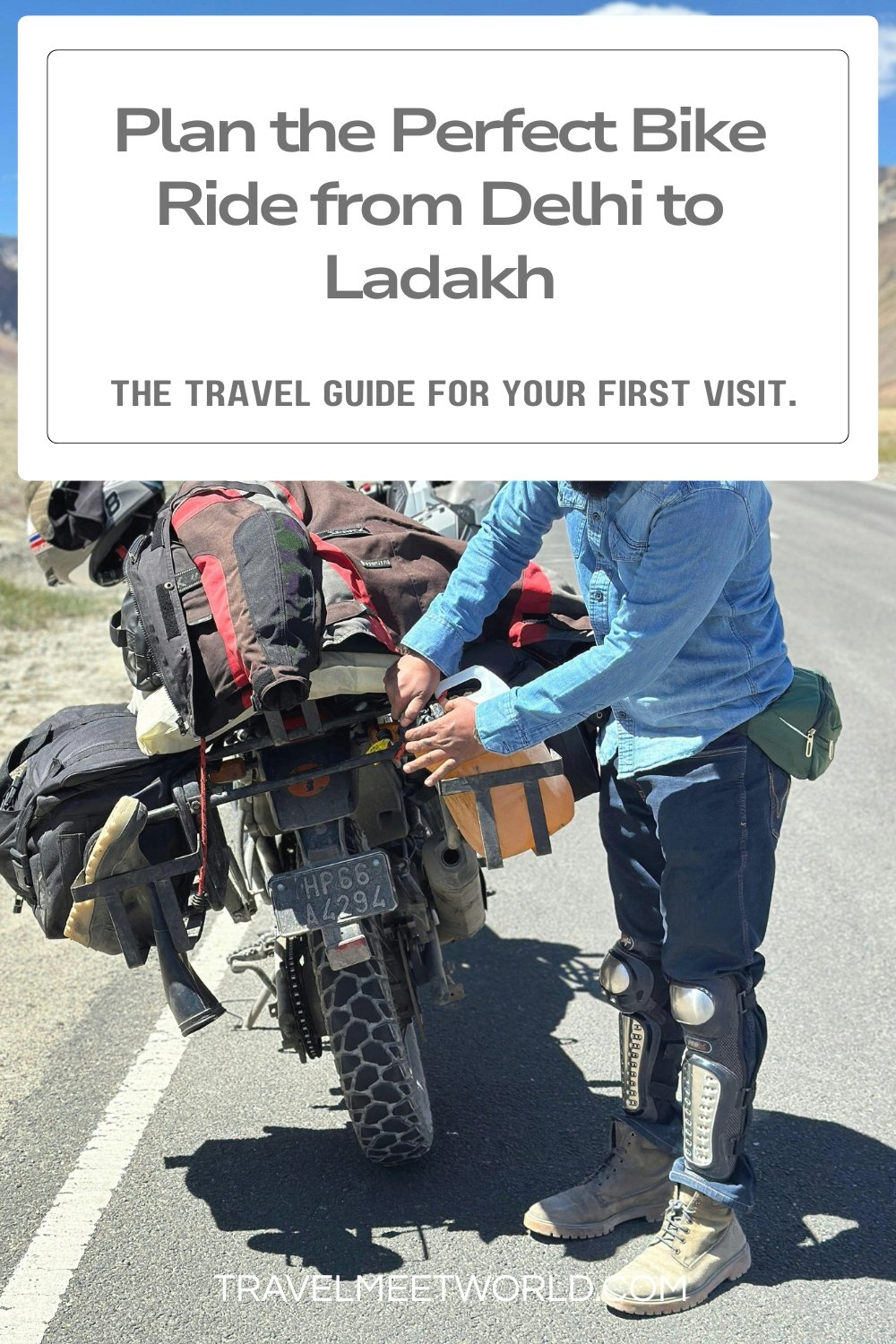
You will need focus and mental toughness to handle the tough terrain and loneliness. Breakdowns are common, so pack spare parts and a repair kit. Essential protective gear like helmets and jackets is a must for the journey.
Carrying a well-stocked first aid kit to deal with cuts, bruises, and altitude sickness is equally important. Given the limited food and accommodation options in remote areas, it becomes essential to budget properly for fuel, accommodation, and permits.
This guide provides comprehensive information for plan the perfect bike ride from Delhi to Ladakh, covering the best time to visit India (Ladakh), how to reach the destination, top activities, accommodation options, dining recommendations, and more.
What is the Best Time to Plan Ride?
In June, heavy winter snowfall melts, and authorities reopen most high-altitude passes like Rohtang La and Baralacha La.
The snow has melted enough for safe passage, but you will still experience snow-capped peaks and cold temperatures. June is ideal if you want to avoid the massive crowds that come at the end of the season.
July and August give ideal riding weather with clear skies and scenic landscapes, though occasional rain on the Manali-Leh route may cause slippery roads. It’s also festival season, adding cultural charm to the journey.
September brings the end of the biking season, with cooler weather setting in and fewer tourists on the roads. By this time, the monsoon has passed, reducing the chances of rain-related challenges.
The roads remain mostly smooth, and the scenery transforms into lush, vibrant landscapes after the monsoon. This is a great time for riders who prefer a quieter experience with fewer tourists.
How to Choose Right Route
When plan the perfect bike ride from Delhi to Ladakh, it is important to choose the right route for both safety and enjoyment.
There are two main routes that riders usually take, each of which offers unique experiences and challenges. Here, we give you a detailed description of both:
Confused between plans? Here helps you compare coverage, price, and benefits side by side.
1. Manali-Leh Highway (NH3)
Distance: Approximately 490 km from Manali to Leh
Duration: 2-3 days (depends on stops and acclimatization)
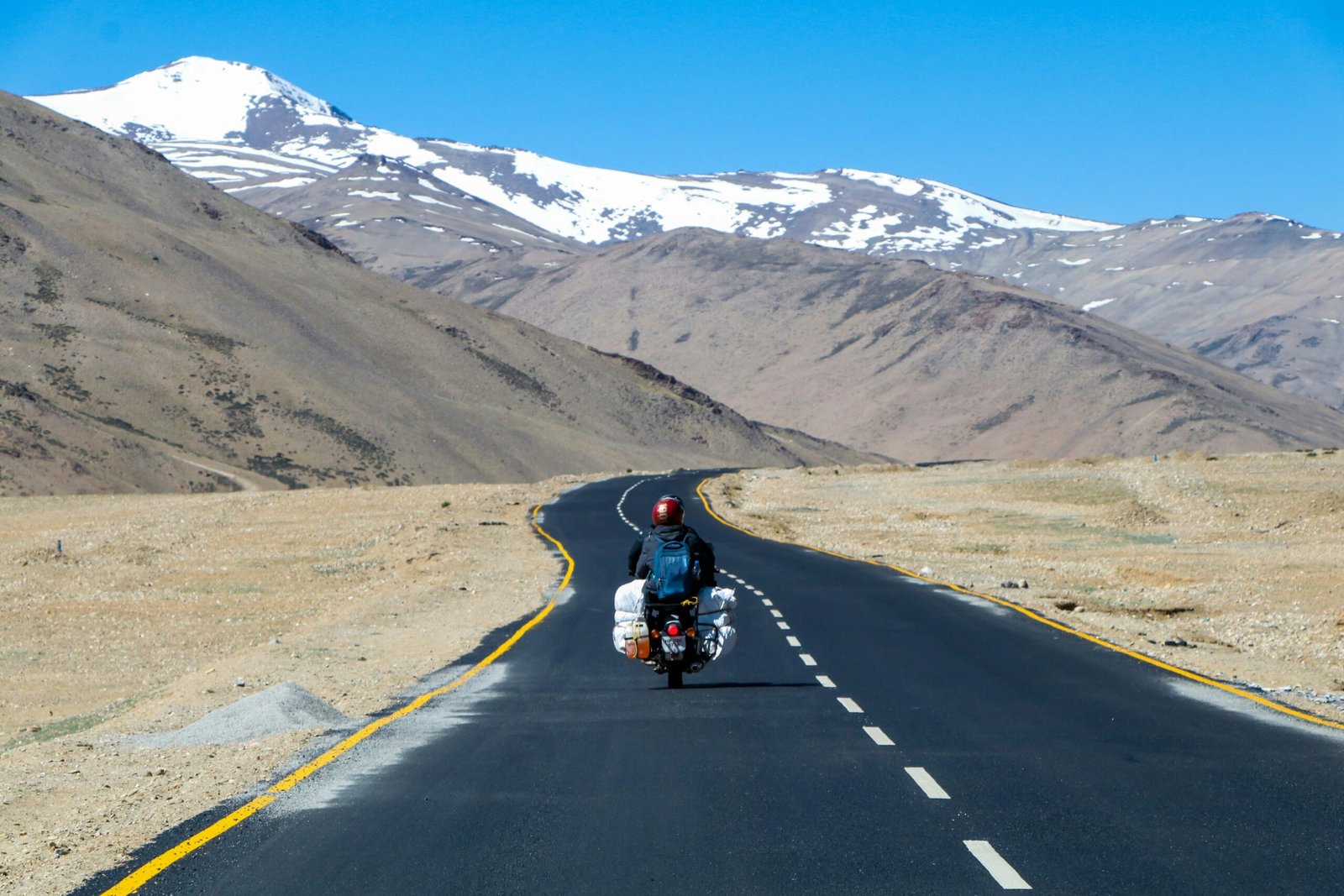
Best route linking Himachal Pradesh to Ladakh. Pixels Of life / Unsplash
This is a more adventurous and challenging route, popular among adventure-seeking bikers. This road takes you through some of the highest motorable passes in the world, giving breathtaking landscapes but also testing your stamina.
- Rohtang Pass, standing at 3,979 meters, is the first major hurdle on the journey, often marked by sudden weather changes like snowfall and landslides, even during the summer months. The pass gives spectacular views, but one needs to travel cautiously.
- Baralacha La Pass, situated at an altitude of 4,890 meters, is known for its difficult terrain and occasional snowfall even in June. It connects the Lahaul Valley in Himachal Pradesh to Ladakh.
- Sarchu: This is a popular overnight stop for bikers located between Baralacha La and Naki La. It is a must for acclimatization, as it is at a very high altitude (around 4,290 meters). Riders often camp here.
- Gata Loops: A series of 21 hairpin bends that climb steeply from the valley floor to the Naki La Pass. These loops are famous for their challenge among the riders and give an exciting riding experience.
- Tanglang La, at an altitude of 5,328 meters, is the second-highest motorable pass in the world and gives stunning views of the surrounding Himalayas.
Why choose this route?
The Manali-Leh Highway is perfect for adventure seekers, giving a thrilling ride with steep climbs, water crossings, and narrow roads. The route offers breathtaking views, from snow-capped peaks and high-altitude deserts to wide-open plains.
Each stretch of the journey reveals stunning scenery. This route is difficult due to the high altitude and rough roads. Riders must carry fuel, food, and repair tools, as the region is sparsely populated.
2. Srinagar-Leh Highway (NH1D)
Distance: Around 420 km from Srinagar to Leh.
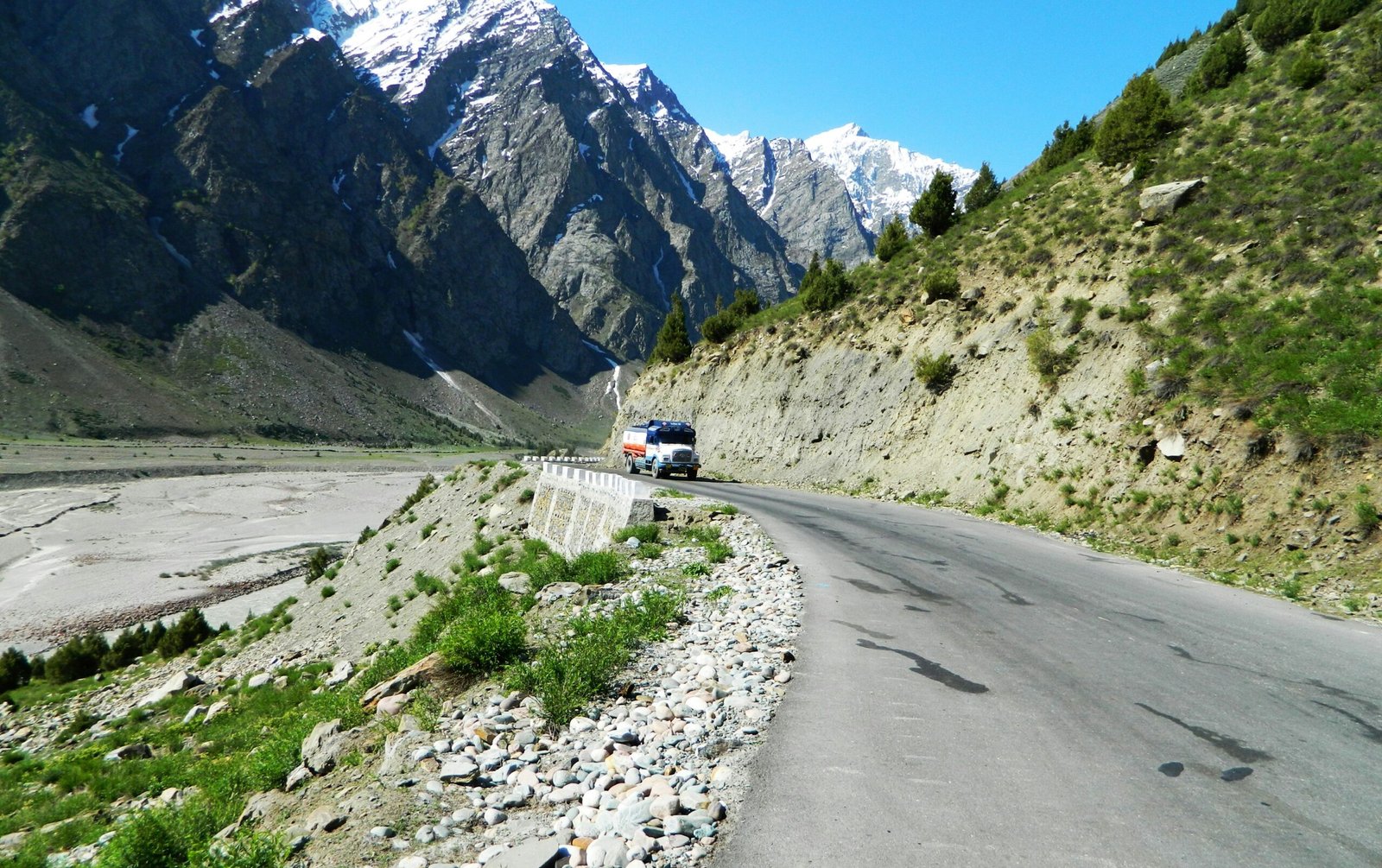
The best key route linking Kashmir to Ladakh. Kuldeep Misra / Unsplash
The Srinagar-Leh highway is an easier option compared to the Manali-Leh route. It’s popular among riders who want to acclimate gradually due to its gentler climb and better road conditions, making for a smoother ride.
- Sonamarg, a scenic hill station along the route, is famous for its green meadows and majestic mountain views, making it an ideal spot to unwind and acclimate before the higher altitudes.
- Zoji La Pass: Located at an altitude of 3,528 meters, Zoji La is one of the toughest stretches of the road, with narrow, winding paths and steep cliffs that make it challenging, although it is at a lower altitude than the other passes.
- Drass, one of the coldest inhabited places on the planet, is a key stopover for riders navigating the high-altitude terrain.
- Kargil, positioned halfway between Srinagar and Leh, serves as a key overnight stop where riders can refuel, rest, and begin acclimatizing to the increasing altitude.
- Lamayuru Monastery: One of the oldest and largest monasteries in Ladakh, Lamayuru is a beautiful spot for cultural exploration. Often called “Moonland,” the area is known for its surreal, moon-like terrain that sets it apart from the rest of the region.
- Namik La and Fotu La: These two high-altitude passes, Namik La at 3,700 m and Fotu La at 4,108 m, offer beautiful views and a smoother ride than the tougher passes on the Manali-Leh route.
Why choose this route?
The gradual ascent on this route helps you adjust more easily to the high altitude, reducing the risk of altitude sickness compared to the Manali-Leh route.
The Srinagar-Leh highway is generally better maintained, with wider roads and fewer water crossings, making it an easier and more comfortable ride for beginners or those who prefer a less challenging route.
This route passes through historically important places like Kargil and Drass, giving you a chance to explore the rich cultural and military history of Ladakh. This route passes through historically important places like Kargil and Drass, giving you a chance to explore the rich cultural and military history of Ladakh.
3. Alternate Route: Spiti Valley to Leh
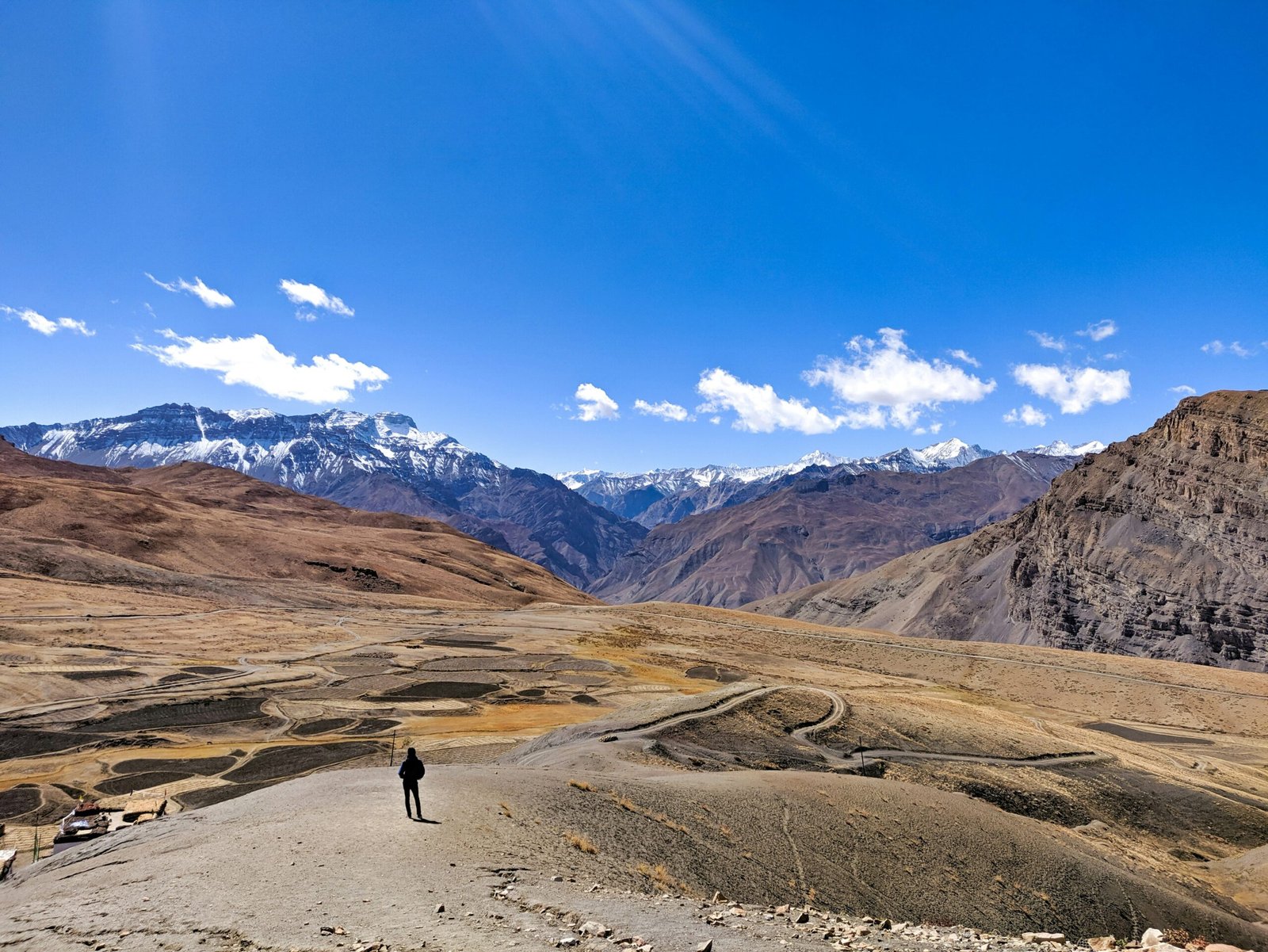
The Spiti with stunning Himalayan views. Sahil Pradhan / Unsplash
Distance: Approximately 850 km
Duration: 5-6 days
Some riders opt for the Spiti Valley route before joining the Manali-Leh highway. Although this route is longer and more challenging, it gives breathtaking views and a remote experience.
- Spiti Valley: A stunning landscape dotted with remote villages and monasteries, known as the “middle land” between Tibet and India.
- Kunzum La Pass, perched at 4,590 meters, presents challenging terrain but rewards travelers with spectacular views of the surrounding mountains.
- Chandratal Lake: A beautiful high-altitude lake where many bikers camp to enjoy its turquoise waters.
Why choose this route?
Offbeat Expedition: Ideal for seasoned riders seeking remote and less-traveled routes filled with adventure.
Spectacular Views: The route has stunning landscapes with rugged mountains and ancient monasteries, making it one of the most beautiful ways to reach Leh.
What accommodation options and pit stops are available along the Delhi to Ladakh route?
Manali
- Johnson Lodge & Spa: A boutique hotel with stunning views and a relaxing spa.
- Hotel Hilltown: Known for its warm hospitality and cosy ambiance.
- The Lost Tribe Hostel: Perfect for backpackers with dormitories ad private rooms.
Srinagar
- Hotel Grand Mumtaz: Comfortable rooms near Dal Lake and easy access to attractions.
- Vivanta Dal View: A luxurious hotel with breathtaking views of Dal Lake.
- Houseboat Stay on Dal Lake: Offers unique views and traditional Kashmiri hospitality.
Kargil
- Hotel D’Zojila: Basic amenities for a comfortable overnight stay.
- Kargil Hotel: Reliable accommodation with essential services.
- Kargil Guest House: A clean, friendly place for weary travelers.
Leh
- The Grand Dragon Ladakh: A luxurious hotel that offers great amenities and spectacular views.
- Hotel Hilltop: Popular for its friendly staff and comfortable rooms.
- Tashi Tage Guest House: Known for its warm hospitality and the opportunity to meet other travelers.
Nubra Valley
- Diskit Camp: Comfortable tents with great views.
- Yarab Tso Camp: Near Yarab Tso Lake, offering spectacular views.
Pangong Lake
- Pangong Lake Camp: Tented accommodations with beautiful views of the lake.
Tso Moriri Lake
- Nomad Life Camp: Basic amenities with great views of the surroundings.
Final Thoughts Your choice of accommodation can greatly impact your bike ride experience from Delhi to Ladakh. Whether you prefer hotels, guesthouses, or camping, each option has its own unique charm. Match your travel style and budget to create an unforgettable journey.
Personally, I prefer using VisitorsCoverage because it’s simple, transparent, and beginner friendly.
Instead of checking multiple websites, try VisitorsCoverage to compare everything in one place.
What Important Stopovers Along the Route?
When planning a bike ride from Delhi to Ladakh, it’s essential to be aware of the key stops along the route for rest, refueling, and proper acclimatization. The journey takes you through challenging terrain, and the major towns or villages along the way provide essential services and breaks.
1. Manali
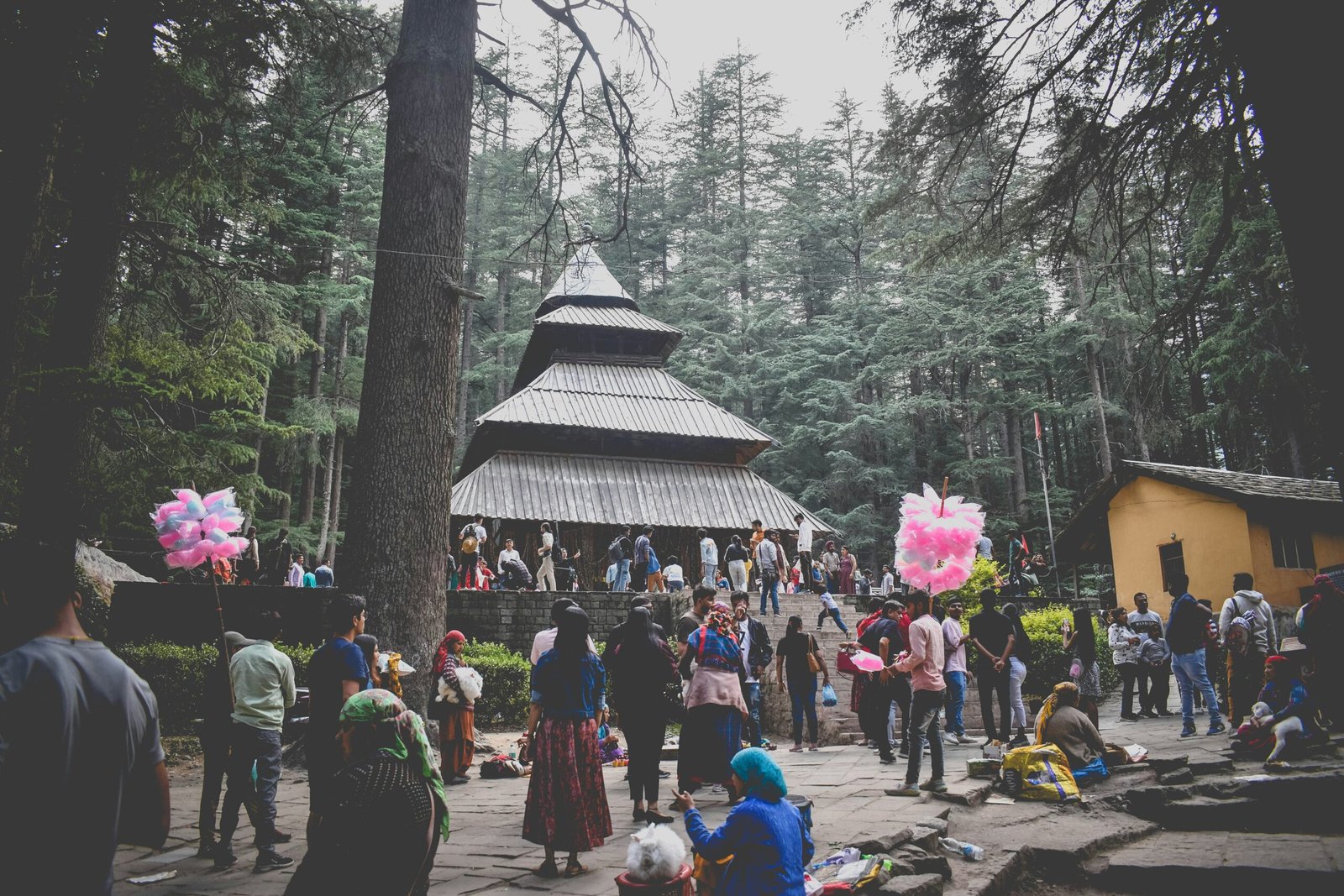
Hadimba and Manu Temples in Manali. Aditya Chache / Unsplash
Altitude: 2,050 m
Distance from Delhi: 540 km
Manali, a well-known hill station, serves as the gateway to the picturesque Leh-Manali highway. It is the best place to rest after a long ride from Delhi and prepare for the tough journey ahead. You will find plenty of hotels, guesthouses, and repair shops here. It is also the last major town before entering the high-altitude regions, so it is the best place to double-check your gear, refuel, and stock up on supplies.
In Manali, visit the ancient Hadimba and Manu Temples for a cultural start to your journey. Unwind in the peaceful vibes of Old Manali or take a dip in the soothing Vashisht Hot Springs. The town also has plenty of fuel stations, making it a convenient stop before heading into higher altitudes.
2. Keylong
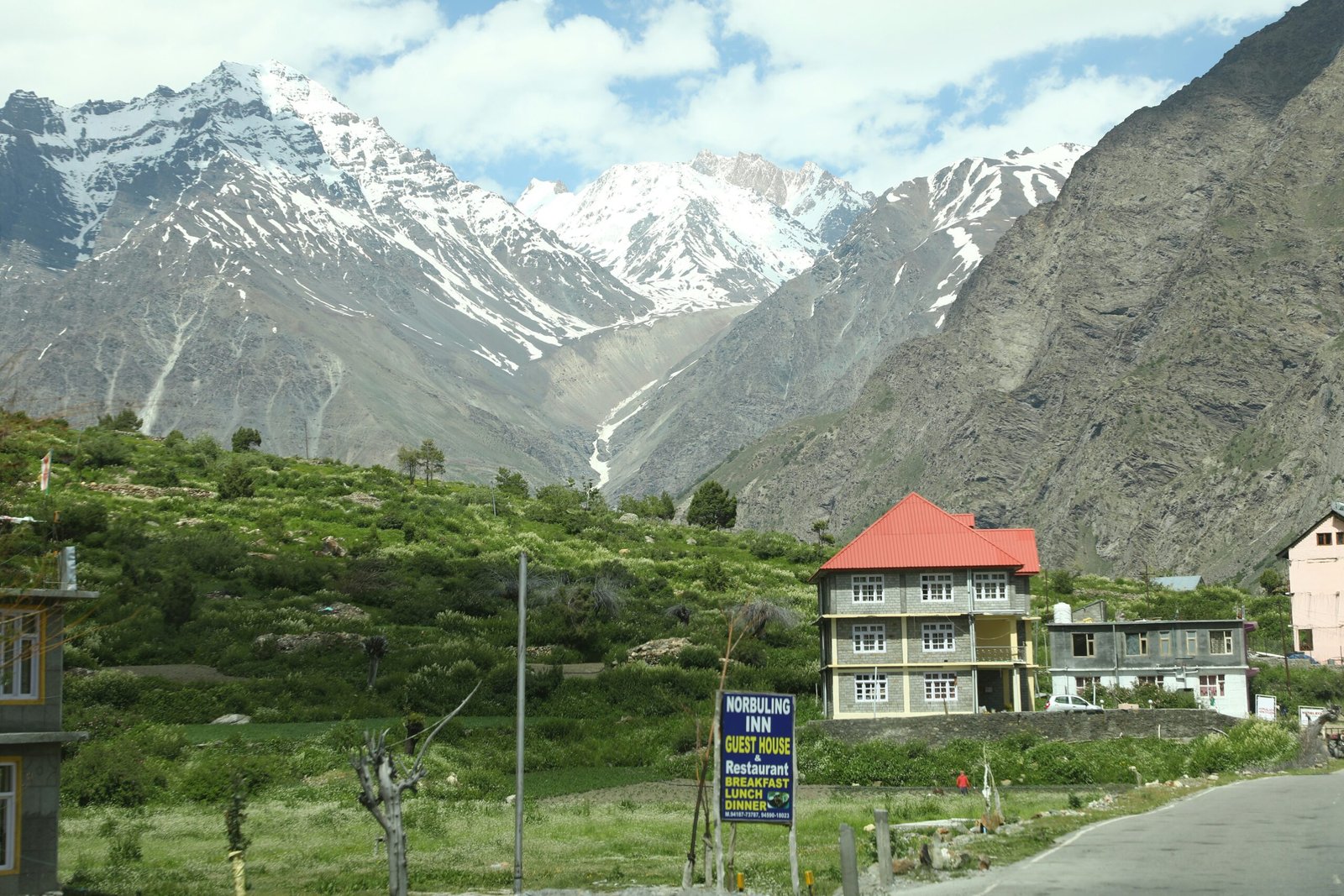
Keylong is known for its monasteries and apple orchards. Rajiv Sadh / Unsplash
Altitude: 3,080 m
Distance from Manali: 120 km
Keylong is a small town in the Lahaul Valley and serves as an important stopover for bikers. It is a good place to rest and acclimatise yourself to the high altitude before proceeding further. Keylong has several basic hotels and guesthouses, as well as a hospital, making it a safe stop in case of health issues like altitude sickness.
In Keylong, explore the spiritual charm of Shashur and Tayul Monasteries, and take time to enjoy the natural beauty of the surrounding Lahaul Valley. Fuel is limited but available make sure to top up here or at Tandi, just 9 km ahead, before continuing your journey.
3. Sarchu
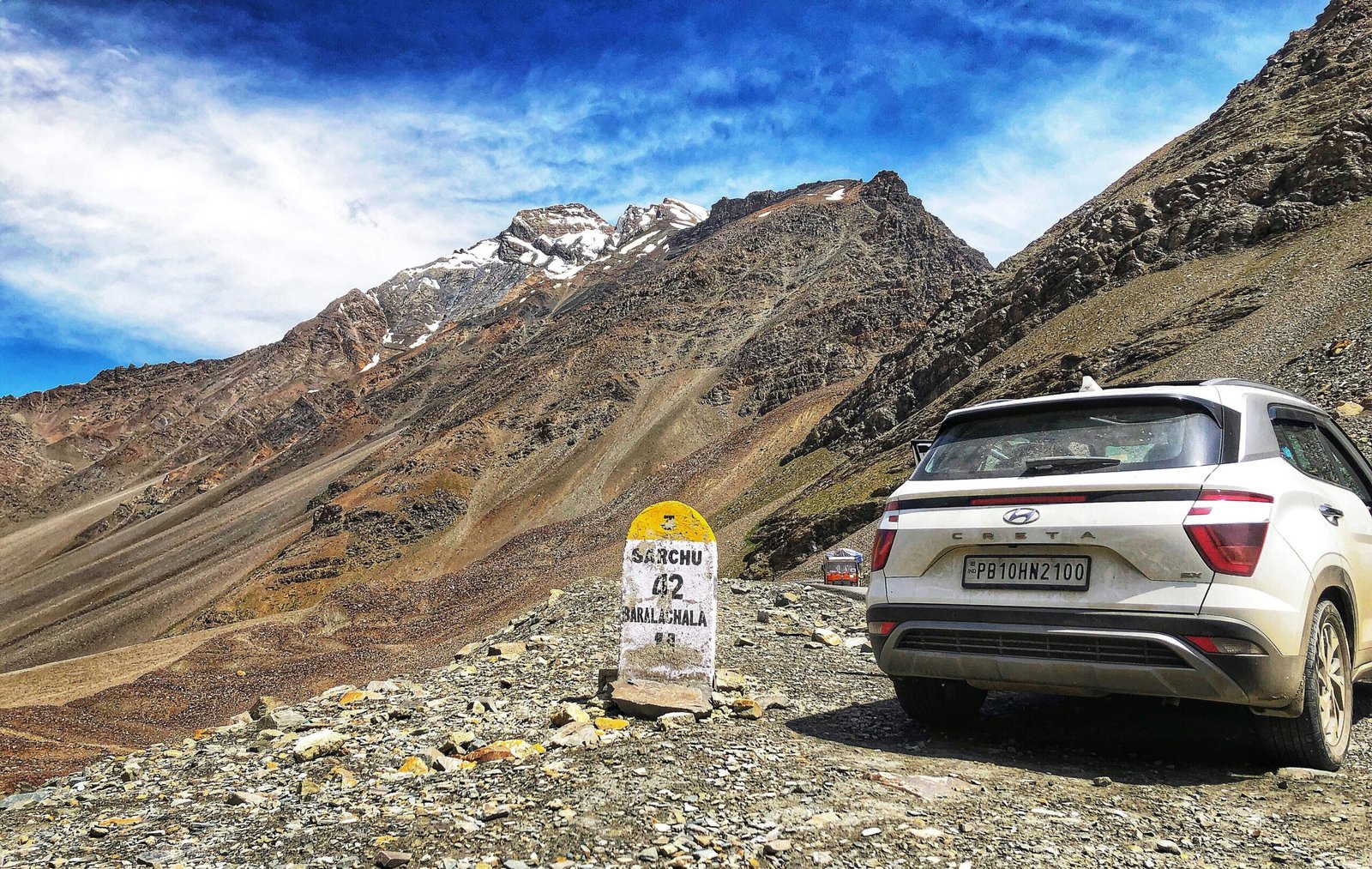
Tented camps, making it a key stopover. Bhavuk Garg / Pexels
Altitude: 4,290 m
Distance from Keylong: 107 km away.
Sarchu, located on the Himachal Pradesh-Jammu and Kashmir border is an important stop for bikers on their way to Leh. It is a popular spot for acclimatisation before tackling high passes like the Baralacha La. The accommodations are mostly tents, giving a remote but unforgettable camping experience under the stars.
At Sarchu, take in the breathtaking views of wide-open plains framed by snow-capped peaks—an ideal spot to rest and acclimatize before tackling the higher mountain passes. There are no fuel stations here, so ensure you refuel at Tandi and carry extra fuel in jerry cans, as the next pump is 250 km away in Leh.
4. Leh
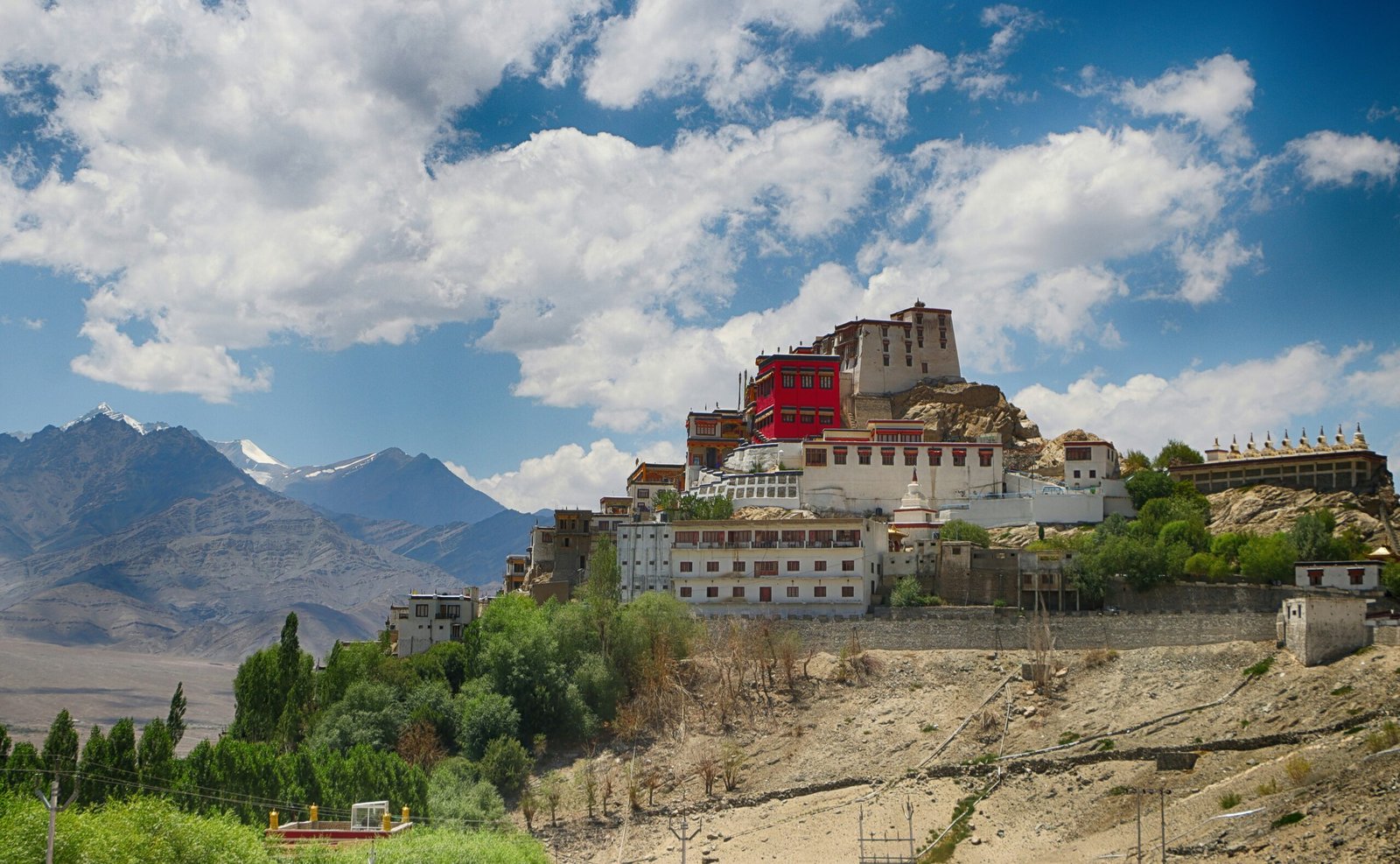
Monument with stunning views and rich royal history. Satyadev Hirani / Unsplash
Altitude: 3,500 m
Distance from Sarchu: 250 km
Leh is the final destination of your trip and the capital of Ladakh. It is the best place to rest, refuel and explore. In Leh you get all the facilities like hotels, restaurants and fuel stations. It is also an ideal base for a trip to Nubra Valley and Pangong Lake.
In Leh, explore cultural landmarks like Leh Palace, Shanti Stupa, and Thikse Monastery, and browse the lively Leh Bazaar for local crafts and souvenirs. Take time to acclimatize before venturing to higher-altitude spots like Khardung La. Fuel is easily available here, with several stations around town.
Tip: You want to travel without getting sick or tired?
Stay energized and safe on every journey. Read
Why these stopovers are important?
These stopovers provide essential services for the journey:
Rest: The challenging terrain and high altitude require regular breaks to avoid fatigue and altitude sickness.
Refuel: Fuel stations are few in remote areas, so it is important to plan your stops carefully for refueling.
Acclimatization: Acute mountain sickness (AMS) can occur at high altitudes, and spending time at lower altitudes (such as in Keylong and Leh) helps the body adjust.
Major repairs: Poor Road conditions can make things difficult for your bike. Stopovers such as Manali, Keylong, and Leh offer mechanic and repair services.
Final Tips
Plan your stops: It is important to know where you will stay each night and make sure you have enough fuel, food, and water.
Book in advance: During peak season, accommodations fill up quickly, so book your stay well ahead of time.
Carry essential supplies: There are no facilities in remote areas between these stopovers, so stock up on food, fuel, and any emergency supplies beforehand.
These stopovers help ensure a safe journey and give you a chance to enjoy stunning landscapes and unique cultural experiences along the way.
Tourism Department, UT Ladakh (official) — Explore infrastructure updates, tourism schemes, permits, and local attractions. https://ladakh.gov.in/tourism-2/?utm_
FAQs
1. How Travel Insurance Work?
It works like a safety backup for your trip- whether you are an Indian traveling abroad or a foreigner visiting India.
2. What covers in Travel Insurance ?
It covers unexpected medical expenses, Travel delays and other emergencies so you don't face stress.
3. Can I get travel insurance different for different countries? l
No, you don't need a separate insurance for each country. You only need policy that covers the region you are traveling to.
4. Do I need travel insurance to get an Indian visa?
While it's not mandatory for most tourist visas, travel insurance is highly recommended for your safety and peace of mind during your visit to India.
5. Can I extend my insurance if I stay longer?
Yes, many insurance providers allow policy extensions online, but it's best to request an extension before your coverage expires.
6. What if I visit multiple countries in South Asia?
Choose a multi-country or regional plan that covers India and neighboring countries like Nepal, Sri Lanka, Bhutan, or the Maldives.
7. Does travel insurance cover adventure sports in India?
Only if you select a plan that includes high-risk activities like trekking in Ladakh, paragliding in Bir Billing, or scuba diving in the Andamans.
8. Can I buy travel insurance after arriving in India?
Some international providers allow late purchases, but coverage typically starts after a waiting period or excludes initial days.


Leave a Comment
Hello!
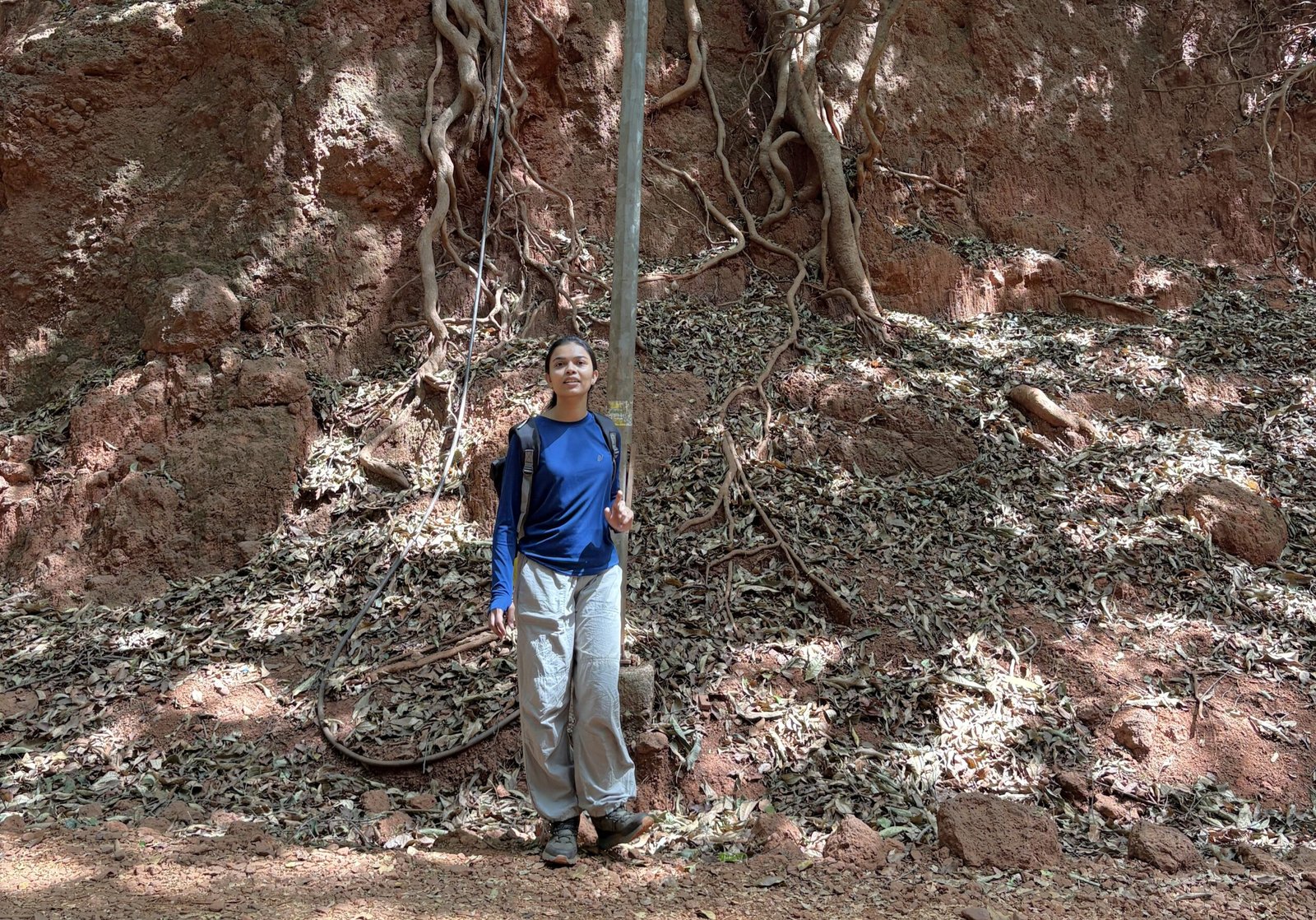
Hi, I’m Pooja Mokashi, a passionate storyteller and travel content creator behind Travel Meet World. Based in Mumbai, I love discovering local cultures and helping travelers explore the world with confidence and smart planning.
Unlock Your Free Travel Hacks
Join 5,000+ travelers getting Free Weekly Travel Tips, Get Exclusive Updates & Download my free travel checklist