
At a roadside stall in India, a closer look at a currency note turns into a moment of awareness. Eugene Nelmin / Unsplash
Indian Currency to Know Before Travel to India

Indian Currency to Know Before Travel to India the story from haggling over handmade souvenirs in a Goa Street market to tipping your rickshaw driver in Mumbai, understanding Indian currency turns confusion into confidence — and every payment into part of the adventure.
In this guide, we’ll walk you through everything — from decoding rupee notes and spotting common scams to understanding digital payments, budgeting smartly, and even avoiding those dreaded traffic challans. Whether you’re counting every rupee or swiping your way through city streets, this guide will help you navigate India’s money landscape with ease, confidence, and a touch of local flair.
Here are the key highlights of Indian currency to know before travel to India.
Every Indian currency note tells a colorful story of culture, history, and everyday life. Dileesh Kumar / Unsplash
1. The Colour Psychology of Indian Currency
Did you know that every Indian currency note tells a colorful story — quite literally? Indian rupee notes are not just valued by their numbers but also by their hues. The earthy brown ₹10 feels like the dusty roads of Rajasthan, while the vibrant purple ₹50 echoes the glow of a Jaipur sunset. The aqua-blue ₹100 resembles the calm backwaters of Kerala, and the sunny yellow ₹200 matches the marigolds strung in a Delhi market. Each denomination has its own personality and recognizing them by colors makes handling cash quick and intuitive — especially for first-time travelers Indian Currency to know before travel to India.
Imagine a handy visual cheat sheet showing each note with its colors, size, and even what landmark is printed on it — perfect for your Instagram carousel, a Pinterest pin, or even a printed wallet card. It’s not just helpful — it’s a fun, visual way to connect travelers with the rhythm and richness of Indian life.

Indian coins are small circles of metal that carry centuries of history in your palm. Clicker happy / Pexels
2. Rupee Rhythms: A Day in India with Just One Note
Imagine holding just a single ₹100 note (about $1.20 USD) and setting off to explore a local neighbourhood. What can you truly experience with it? Quite a lot, actually. Start your morning with a steaming glass of masala chai at a roadside tapri for ₹10, hop into a shared rickshaw for ₹20, and stroll into a historic fort with a ₹30 entry ticket. You still have enough left for a spicy plate of street-side chaat and a sweet jalebi to finish your day.
This challenge isn’t just about spending less — it’s about slowing down, looking closer, and savoring every rupee. Turn it into a travel ritual: “How much joy can one note buy?” Try this on your first day in India and share your experience to us on — social media
3. Regional Currency Culture: How Money Behaviour Changes Across India
Indian currency shifts from state to state. Different parts of India use money in different ways. In Goa’s beach cafés and cool little restaurants, paying by card or using a phone app is very common and easy. But travel to the ghats of Varanasi, and you’ll find that cash is still king, especially with local vendors and boatmen.
In the northeastern hills, you might be surprised to see tiny tea stalls using QR codes stuck on tree trunks — a digital leap in remote landscapes. Meanwhile, in Rajasthan, while you can book a luxury hotel online, the camel handler, folk musician, or local guide will appreciate — and often expect — a tip in crisp cash.
Understanding these subtle regional differences isn’t just smart; it helps you blend in like a local. This is the smartest way to for Indian currency to know before travel to India.
4. The Life of a Rupee: Where Your Money Travels After You Spend It
Ever wondered what happens to your ₹100 note after you spend it? Let’s follow its journey. You hand it to a smiling chaiwala for two cups of hot masala chai. He tucks it into his metal box and later uses that same note to buy tea leaves from a local wholesaler. The wholesaler then pays a delivery guy, who uses the money to fill petrol in his scooter. On the way home, he buys some snacks for his kids with the same note. Later, it’s handed over at a shop and finally makes its way into a bank — ready to keep moving through the economy.
This single rupee has touched lives, paid wages, stocked shelves, and fueled dreams. As a traveller, every note you spend does more than buy you an experience the Value of Indian currency — it becomes part of the beating heart of India’s local economy. It’s a beautiful reminder that even the smallest purchase can ripple out in meaningful ways.
5. Local Words for Money Across India
In India, money isn’t just currency — it’s culture. Across different states, people use their own local words to talk about it. You’ll hear a chaiwala in Delhi casually say, “Paisa chhutta hai?” (Do you have change?), while a shopkeeper in Rajasthan might ask for “rupiya” instead of rupees. In Mumbai, the word “note” often means paper cash, and “sikka” is your go-to term for coins. Some regions even say “kharcha” when referring to expenses or spending.
These little linguistic gems are more than just slang — they carry the flavors of daily life, street banter, and human connection. Imagine having a small downloadable audio glossary where you can hear these words spoken in local accents — or an Instagram reel series where travelers learn to say “money” in five Indian languages! It’s a fun, cultural bridge that helps travelers not just spend money in India but speak Indian currency to know before travel to India.

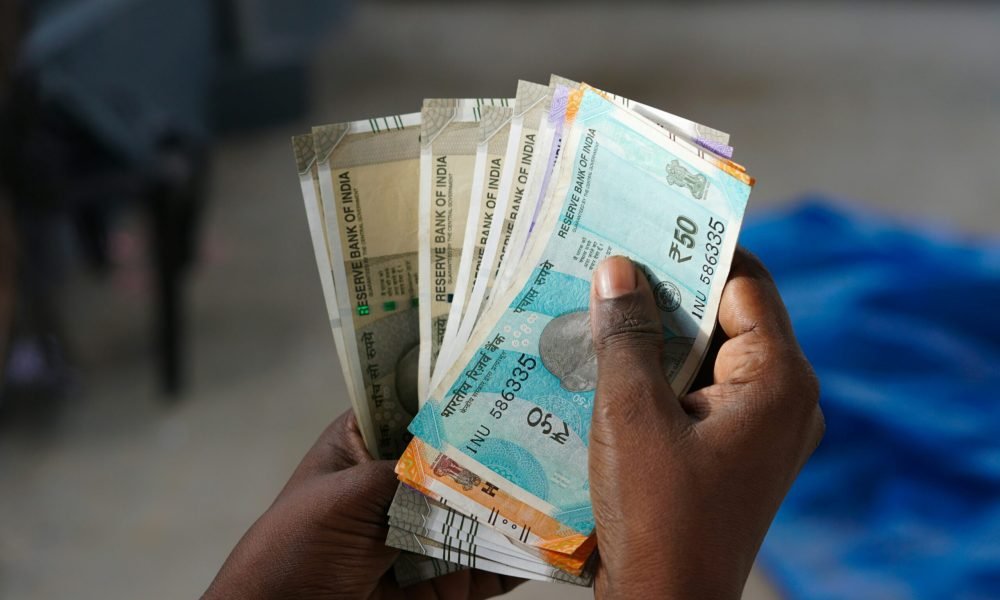
A man holding the Indian Rupee carries the strength of a billion dreams in every note. Roman Saienko / Pexels
6. How Indian Currency Reflects Its Culture
Indian currency is a pocket-sized museum of the nation’s soul. The ever-present face of Mahatma Gandhi reminds us of freedom and peace, while the ₹2,000 note (now phased out but still circulating) features Mangalyaan, India’s proud leap into space. The ₹10 note carries the image of the Sun Temple at Konark, a nod to India’s ancient architectural brilliance. Turn a ₹100 note, and you’ll spot the Rani ki Vav stepwell, a UNESCO heritage site. Even the ₹50 note, with a majestic Himalayan tiger, roars with the spirit of India’s wild heart.
These aren’t just notes —they’re miniature postcards from across India, filled with cultural pride. Encourage travelers not to simply spend them but to collect one of each denomination as souvenirs — a colorful and meaningful reminder of the places, stories, and legends they touched on their journey through India.
7. What ₹100 Buys You Across India (City vs Village Reality)
In India, ₹100 carries a fascinating dual identity; the note stays the same, but its power transforms completely depending on where you are. In a metro city like Mumbai, Delhi, or Bengaluru, ₹100 often disappears quietly. It might buy you a single cup of café coffee, a short auto-rickshaw ride, or a basic street snack with little change left. High rents, fast-paced lifestyles, and demand-driven pricing mean cities treat ₹100 as small change. You spend it quickly, often without noticing, especially in places where digital payments make money feel invisible.
Travel a few hours away into a small town or village, and the same ₹100 suddenly feels generous. Here, it can cover a hearty meal at a local Dhaba, fresh vegetables for the day, multiple cups of tea, or even a short bus journey plus snacks. Prices reflect local incomes, slower rhythms, and community-based living. Cash is more tangible here; people count notes carefully, and spending ₹100 often comes with conversation, trust, and human connection rather than a QR scan.
For travelers, this contrast is a powerful budgeting lesson. Your daily expenses won’t just depend on what you do, but also on where you do it. In metros, plan higher daily cash or card usage for transport and food, while in smaller towns and villages, modest amounts go much further, but cash becomes essential. Understanding this city-village reality helps travelers budget smarter, appreciate India’s economic diversity, and recognize how money mirrors lifestyle rather than just cost.
8. Night Markets & Early Mornings: When Cash Matters Most
In India, the moments when the city sleeps or just begins to wake are often when cash quietly takes control. Late-night chai stalls, roadside omelette carts, and night markets thrive on quick exchanges and human familiarity rather than card machines. These vendors operate on thin margins and fast turnover; a crumpled ₹20 or ₹50 note is faster than scanning a QR code, especially when electricity, internet, or phone battery becomes unreliable. For travelers, having small cash at night means freedom: the freedom to stop, taste, and experience without hesitation.
Early mornings tell a similar story. Temple visits at dawn, especially in sacred towns, rely heavily on cash for offerings, prasad, shoe storage, and donations. These are moments rooted in tradition, where digital payments feel out of place. Dropping a few notes into a donation box or handing change to a priest is not just practical; it’s part of the ritual rhythm. ATMs and shops may still be closed at this hour, making advance cash preparation essential.
Transport timing adds another layer. Early-morning buses, shared jeeps, ferries, and late-night autos often expect cash payment, particularly outside metro cities. Drivers may not carry change or accept digital transfers during odd hours. For travelers, the insight is simple but powerful: carry small cash before the night begins and before the sun rises. These are the hours when India feels most alive and when cash keeps you moving effortlessly through it.
9. Emergency Money Moments: What to Do If You Run Out of Cash
Running out of cash in India can feel stressful, but it’s a situation many travelers face often due to ATM failures or unexpected bank holidays. ATMs may run out of money in busy areas, stop working late at night, or temporarily go offline because of network issues. In smaller towns, you might find only one or two ATMs serving the entire area, making access unpredictable.
The key to handling these moments is flexibility and local awareness. Digital payments can be a lifesaver in cities; apps, cards, or QR payments are widely accepted in cafés, pharmacies, and hotels. However, in rural areas or religious towns, cash is still king. In such cases, hotels or guesthouses sometimes allow card payments or can guide you to the nearest functioning ATM, even if it’s a few kilometers away. Local shopkeepers may also help by giving cash in exchange for a digital transfer, a common, trust-based solution in many parts of India.
For realistic travel planning, always anticipate cash gaps before they happen. Withdraw money during the day, keep small denominations, and never rely on a single ATM or card. Carry a backup debit or credit card, store emergency cash separately, and ask locals about upcoming holidays when arriving in a new region. In India, solutions often come through people rather than systems. Staying calm, polite, and open usually turns an emergency into just another memorable travel moment.
10. The Hidden Cost of Travel: Small Expenses Tourists Forget
India may appear inexpensive at first glance, but travelers quickly realize that small, recurring charges throughout the day can subtly increase their overall budget. Public toilets are a common example. Clean, maintained restrooms in markets, railway stations, and tourist areas usually charge a small fee, often ₹5 to ₹20. It’s a minor amount, but without loose change, it can become inconvenient. These facilities are part of daily life in India, and paying for them supports upkeep rather than being an unnecessary charge.
Luggage storage is another overlooked cost, especially for travelers arriving early or departing late. Railway stations, bus terminals, and popular tourist hubs often offer cloakroom or locker services for a few hours at a fixed fee. In smaller towns, local shops or guesthouses may watch your bags for a small tip. These services provide freedom to explore hands-free, but they work almost entirely on cash, making advance planning important.
Temples introduce a uniquely cultural expense: shoe storage. Most temples require visitors to remove footwear before entering, and organized shoe counters charge a small amount for safekeeping. While the cost is minimal, forgetting to budget for it can feel unexpected. Together, these tiny payments reveal an important travel truth: in India, it’s not the big expenses but the everyday details that shape your real budget, and carrying small cash keeps these moments smooth and respectful.
Official government websites
Indian Currency to Know Before Travel to India
Before you land in India, it’s smart to get familiar with the Indian Rupee (INR) — how it looks, works, and is used across the country. From colorful notes to QR codes on roadside stalls, money here is more than just paper — it’s part of the experience.
For the most accurate and official information, visit the Reserve Bank of India’s website: https://www.rbi.org.in/
FAQs
1. What is the official currency of India? or What should I know about Indian currency before travel to India?
The official currency is the Indian Rupee (INR), symbolized as ₹. It comes in coins and colorful notes of different denominations.
2. What denominations of Indian currency are commonly used?
You’ll typically find:
Coins: ₹1, ₹2, ₹5, ₹10
Notes: ₹10, ₹20, ₹50, ₹100, ₹200, ₹500
The ₹2,000 note is rarely used and is being phased out.
3. Can I use US Dollars or Euros in India?
No. Foreign currency is not accepted for daily use. You must exchange it at a bank, airport counter, or licensed money changer.
4. Is it better to carry cash or use a card in India?
Both! Cash is essential in rural areas and for small purchases. Cards and UPI apps like Google Pay and PhonePe are widely accepted in cities.
5. Are digital payments safe and common in India?
Yes! India is very digital-friendly. UPI (Unified Payments Interface) is used everywhere from cafes to street stalls. Just ask: “UPI chalega?”
6. Where can I exchange money in India?
You can exchange at:
Airports (higher fees)
Local money changers
Banks (bring your passport) Always ask for a receipt.
7. What’s the best way to avoid fake notes?
Use ATMs, banks, or authorized money exchangers. Learn to check the security features — watermarks, see-through number, raised print, etc.
8. Are tips expected in India?
Tipping is common but not mandatory. You can tip:
₹10–₹50 to porters or taxi drivers
₹100+ for good service at restaurants Cash is preferred
9. How much Indian currency can I bring into the country?
Foreigners are not allowed to bring in Indian rupees. Bring foreign currency and exchange it after arrival.
10. Can I take Indian currency back home?
Yes, but not in large amounts. You may take up to ₹25,000 in Indian currency when leaving, but most travelers exchange it back before departure.
GUIDED BY TRAVEL MEET WORLD
Yoga within Travel the perfect flow of Experience
Explore wellness within Travel
by