Camel riding in Egypt lets you explore the desert and pyramids just like ancient travelers once did. Benjamin Deyoung / Unsplash
20 Best Things to Do in Egypt
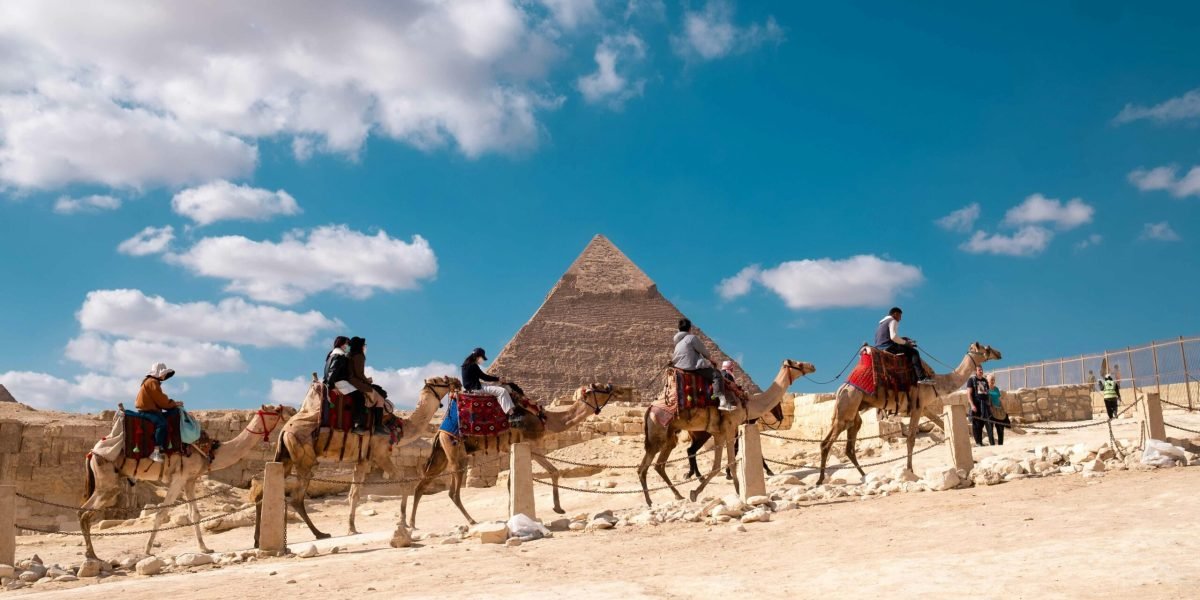
Ancient temples, tombs, and cities still stand today in Egypt, preserving some of the world’s oldest history. From the vast Sahara dunes to the green shores of the Nile, Egypt beautifully connects its rich history with today’s vibrant culture.
Whether you’re standing in awe before the towering Great Pyramids of Giza and Sphinx, sailing peacefully on a felucca through Luxor’s twilight skies, or sipping mint tea in a Nubian village by the river, this country gives you the best things. But Egypt is not only about temples and tombs; it’s also about coral reefs in the Red Sea, colorful bazaars buzzing with life, hot springs in hidden oases, and stories shared over home-cooked meals.
This guide highlights 20 of the best things to do in Egypt, from famous landmarks to hidden gems that will leave you inspired and wanting to explore more.
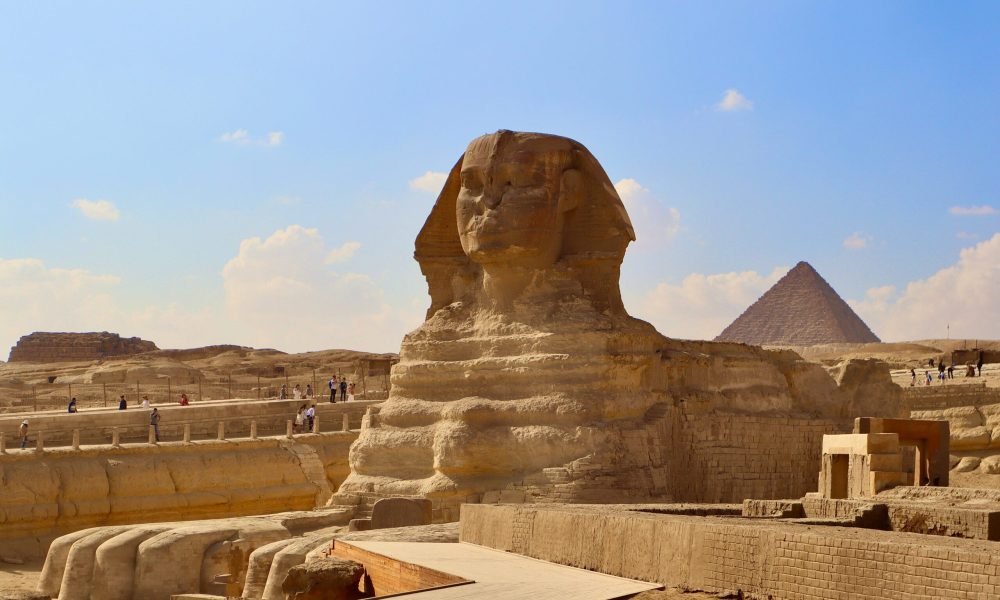
Best things to do in Egypt to see the lion’s body and a human face, long thought to be a silent guardian of the ancient burial site. Dilip Poddar / Unsplash
1. Marvel at the Great Pyramids of Giza and the Sphinx
Standing tall on the edge of Cairo’s desert, the Great Pyramids of Giza are Egypt’s most iconic and awe-inspiring landmarks. Dating back more than 4,500 years, these massive pyramids were built as burial sites for Egypt’s pharaohs, most notably for Pharaoh Khufu, whose pyramid is still the largest ever built.
Although each limestone block weighs several tons, the pyramids were constructed with incredible accuracy, so much so that engineers today still wonder how the ancient builders achieved such precision. Close to the pyramids stands the Great Sphinx, a giant limestone figure with a lion’s body and a human face, long thought to be a silent guardian of the ancient burial site.
Fact: Originally, the Great Pyramid was coated with smooth, polished Tura limestone casing stones that reflected sunlight, causing it to sparkle brilliantly like a precious jewel. Today, a few of these polished stones still shine at the base, giving a glimpse of the pyramid’s original dazzling brilliance.
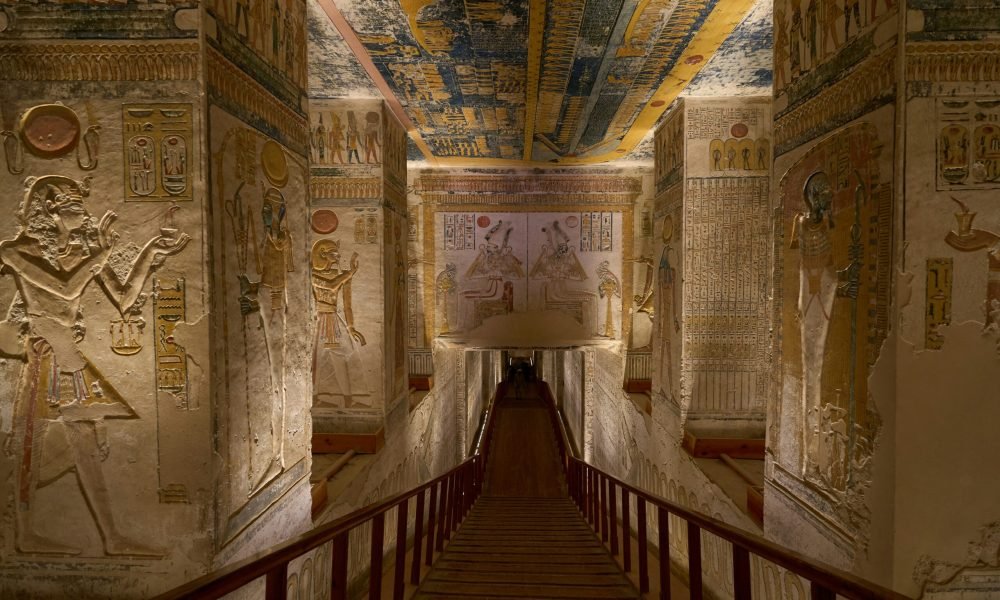
The Pharaohs’ tombs are hidden desert gateways to Egypt’s ancient secrets. Dmitrii Zhodzishskii / Unsplash
2. Step Inside the Tombs of the Pharaohs in the Valley of the Kings
Hidden among the arid hills on the west bank of the Nile near Luxor lies the Valley of the Kings, an ancient royal burial ground that holds the secrets of Egypt’s most powerful rulers. For over 500 years, pharaohs of the New Kingdom, including the famous Tutankhamun, were buried in elaborately decorated tombs carved deep into the limestone cliffs.
As you walk through the corridors, vibrant wall paintings still glow with scenes of the afterlife, gods, and sacred rituals, preserved for millennia by the dry desert air. Each tomb was uniquely designed to guide the soul of the king to the afterlife, filled with treasures, symbolic texts, and hidden chambers.
Fact: Tutankhamun’s tomb, discovered in 1922 almost completely intact, contained over 5,000 artifacts—including the famous golden death mask—and sparked global fascination with Egyptology. Visiting the valley today gives more than just history; it’s a step into the heart of ancient beliefs, craftsmanship, and the eternal legacy of the pharaohs.
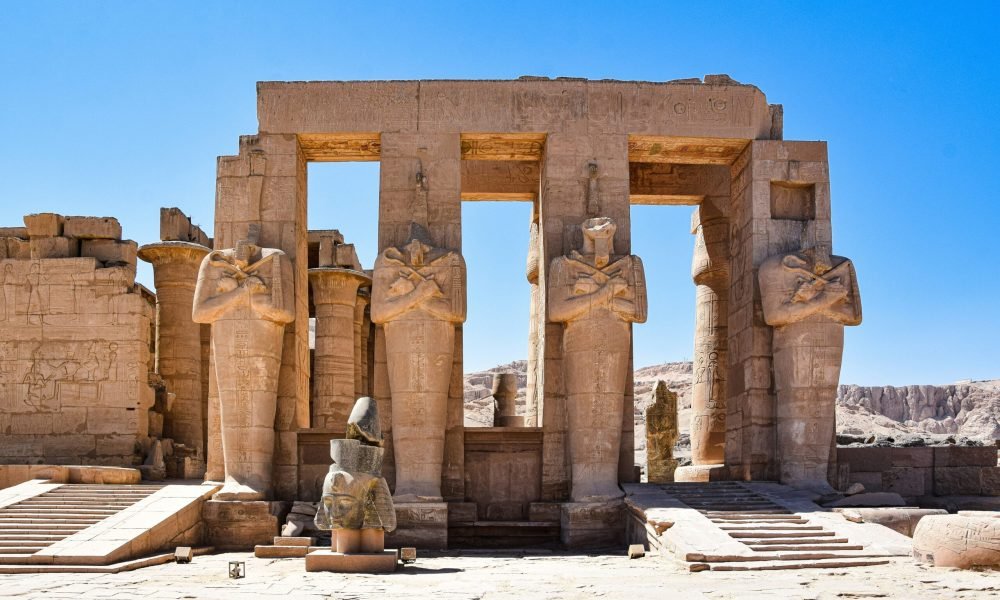
Karnak and Luxor temples are stone diaries of Egypt’s ancient gods and kings. AXP / Unsplash
3. Explore the Massive Temples of Karnak and Luxor
Located on the east bank of the Nile in Luxor, the temples of Karnak and Luxor are some of ancient Egypt’s most impressive architectural wonders. Karnak, considered the largest religious complex ever built, took over 2,000 years to complete, with successive pharaohs expanding and decorating it to reflect their power and devotion.
Entering the Hypostyle Hall at Karnak, adorned with 134 towering columns adorned with intricate hieroglyphs, evokes a sense of entering a sacred space eternally frozen in time. Nearby, the Luxor Temple stands gracefully amidst the city’s bustle, once connected to Karnak by the Avenue of Sphinxes, a grand ceremonial route flanked by ram-headed statues that echoed with the footsteps of priests, pharaohs, and festival processions.
Fact: Recent excavations have revealed that the Avenue of Sphinxes stretched over 2.7 kilometers and was used for grand processions during the annual Opet Festival, where statues of the gods were paraded between the temples. Exploring these sites today offers a powerful glimpse into Egypt’s religious life and the architectural genius of its ancient builders.
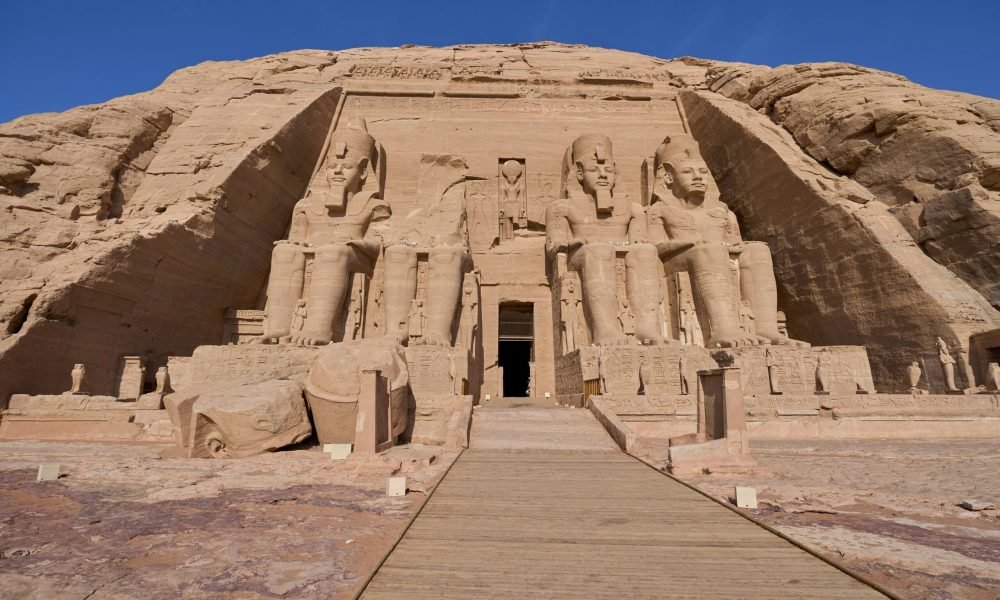
Abu Simbel is a colossal rock-cut temple where Ramses II’s legacy rises with the sun to awe the world. Dmitrii Zhodzishskii / Unsplash
4. Uncover the Secrets of Abu Simbel, Ramses II’s Monumental Legacy
Deep in southern Egypt near the Sudanese border, the temples of Abu Simbel rise dramatically from the desert, carved directly into a sandstone cliff. Built by Pharaoh Ramses II over 3,000 years ago, this awe-inspiring complex was created to honor the gods and to showcase the might of the pharaoh himself.
Four colossal statues of Ramses, each over 20 meters tall, guard the entrance and set the tone for what lies within: vast halls, detailed wall carvings, and sacred chambers bathed in golden light. The smaller temple beside it is dedicated to his beloved wife, Queen Nefertari, one of the rare times a royal consort was given such architectural honor.
Fact: In the 1960s, the entire temple complex was carefully dismantled and relocated to higher ground to save it from flooding caused by the construction of the Aswan High Dam. This massive engineering feat, led by UNESCO, preserved one of Egypt’s greatest treasures and remains a global symbol of heritage conservation. Visiting Abu Simbel is not just a trip through history; it’s a powerful experience of devotion, artistry, and timeless pride.

The sky turns shades of gold, pink, and orange, casting a magical glow over the water and surrounding landscapes. Gijs-Jakobs / Unsplash
5. Sail the Nile on a Traditional Felucca at Sunset
There’s no better way to experience the timeless beauty of Egypt than by gliding along the Nile in a traditional felucca, a wooden sailboat powered only by the wind. As the sun begins to set, the sky turns shades of gold, pink, and orange, casting a magical glow over the water and surrounding landscapes.
With the soft rustle of sails and the rhythmic flow of the Nile beneath you, a felucca ride feels like slipping into a slower, more timeless world. Unlike noisy motorboats, these traditional sailboats move gracefully and silently, offering an eco-friendly journey that mirrors how Egyptians once traveled thousands of years ago.
A unique fact: the design of the felucca has remained largely unchanged since the time of the pharaohs, making it not only a relaxing experience but also a living piece of Egypt’s maritime history.

The Nile, the world’s longest river, has been Egypt’s lifeline for over 5,000 years. Bogdan Kupriets / Unsplash
6. Take a Multi-Day Nile Cruise from Aswan to Luxor
Cruising the Nile from Aswan to Luxor over several days gives a truly memorable way to experience the heart of Egypt and its ancient wonders. As the river winds through timeless landscapes, passengers enjoy a front-row seat to ancient temples, riverside villages, and golden desert horizons.
Spanning three to four days, the cruise offers a perfect mix of relaxation and discovery. Along the way, you’ll visit remarkable landmarks such as the dual-deity Temple of Kom Ombo and the grand Temple of Edfu, one of Egypt’s best-preserved sites. Onboard, expect warm Egyptian hospitality, delicious traditional meals, and enchanting evening entertainment beneath the open sky.
Fact: The route between Aswan and Luxor mirrors the same path ancient Egyptians used during sacred processions, connecting the religious centers of Upper Egypt.
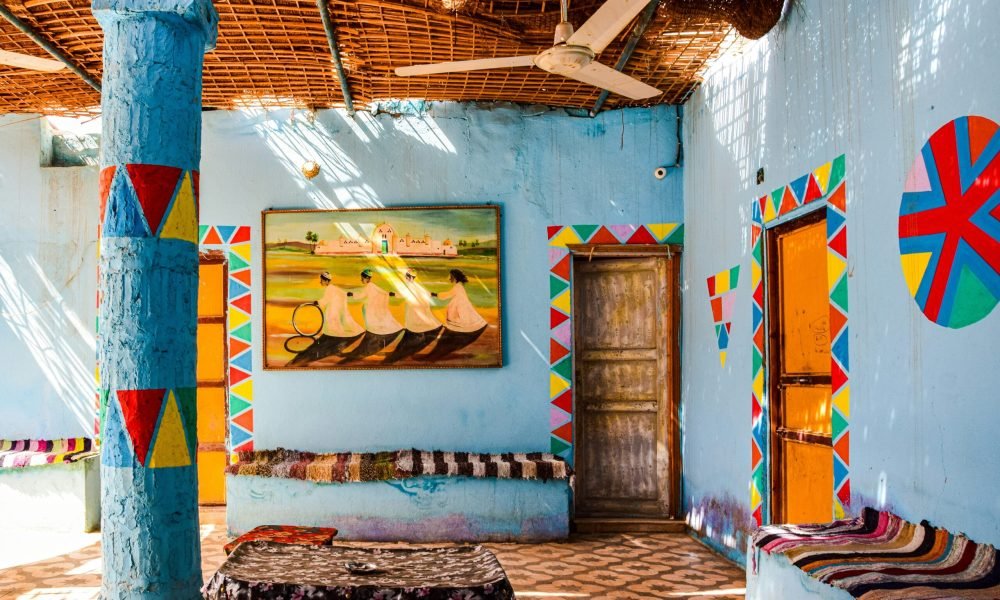
Their brightly colored homes with bold geometric patterns create a vibrant, welcoming atmosphere. AXP / Unsplash
7. Discover Nubian Culture in a Village along the Nile
Tucked along the banks of the Nile near Aswan, colorful Nubian villages give a warm and vibrant glimpse into one of Egypt’s oldest living cultures. Their homes, adorned with vivid colors and striking geometric designs in shades of blue, orange, and pink, create a vibrant and welcoming atmosphere that delights both sight and spirit.
A visit here goes beyond sightseeing; you’re welcomed with open arms by locals who are proud to share their traditions, music, cuisine, and stories. You might sip hibiscus tea in a family courtyard, learn to cook authentic Nubian dishes, or listen to folk songs passed down for generations.
Fact: The Nubians have their language, called Nobiin, which is still spoken in daily life but has no written form, preserving their history mainly through oral storytelling. Visiting a Nubian village is not just a cultural experience; it’s a heartfelt connection with a resilient community that has preserved its identity through centuries of change.
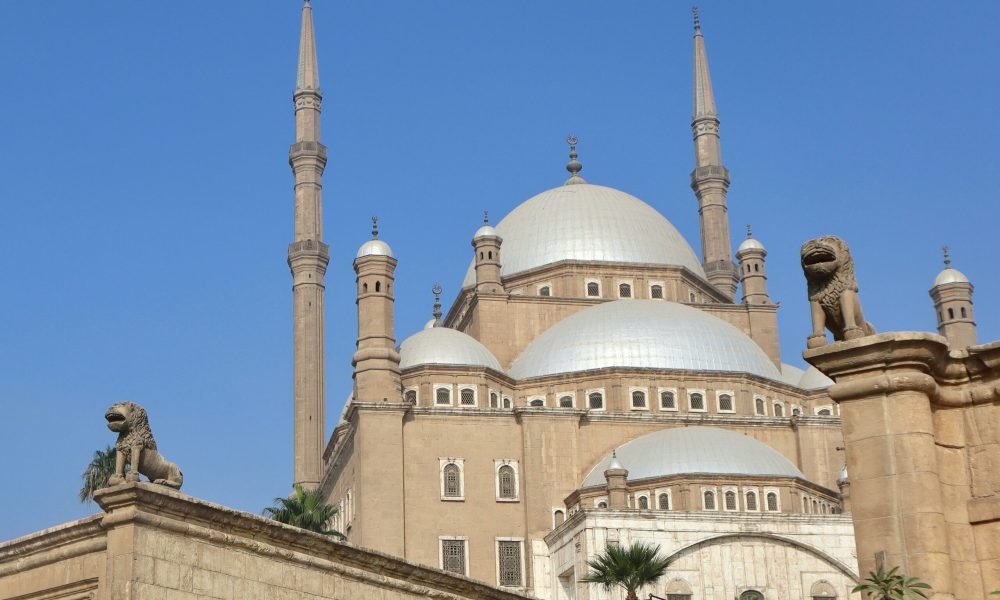
The Mosque of Muhammad Ali, with its grand Ottoman domes, crowns Cairo’s skyline as a symbol of history and faith. Dilip Poddar/ Unsplash
8. Wander the Islamic Cairo District and Climb the Citadel
Wandering through Islamic Cairo feels like entering a living museum, where ancient mosques, lively markets, and narrow stone alleys reveal the rich layers of Cairo’s medieval past. This vibrant district showcases Cairo’s medieval heart, where minarets pierce the skyline and traditional craftsmanship thrives in places like Khan el-Khalili market.
The Citadel of Saladin stands as one of Islamic Cairo’s most iconic sights, a powerful 12th-century stronghold built to shield the city from Crusader invasions. From its elevated perch, you can take in panoramic views of the city below, while inside, the grand Mosque of Muhammad Ali impresses with its graceful Ottoman architecture, alabaster walls, and majestic domes.
Fact: The Citadel served as Egypt’s seat of government for over 700 years, housing rulers from the Ayyubid, Mamluk, and Ottoman periods. Visiting Islamic Cairo isn’t just a historical tour; it’s an immersive journey through the spiritual, artistic, and political soul of old Cairo.
9. Get Lost in Khan El Khalili Bazaar’s Historic Alleyways
Khan El Khalili, Cairo’s iconic bazaar, bursts with color, aroma, and energy, offering a timeless journey through Egypt’s rich culture and craftsmanship. Located in the heart of Islamic Cairo, this centuries-old bazaar is a maze of narrow alleys lined with shops selling everything from glittering lanterns and handwoven textiles to spices, perfumes, and handcrafted jewelry.
As you wander through its vibrant lanes, you’ll hear the calls of merchants, the clinking of copperware, and the soft hum of Arabic music in the background. It’s a place where haggling is part of the fun, and each turn reveals something unexpected: an ancient mosque, a hidden courtyard café, or a shop filled with antiques.
Fact: Dating back to the 14th century, Khan El Khalili was once a bustling center for foreign merchants, built atop the site of an old mausoleum. Today, it remains a vibrant symbol of Cairo’s rich heritage, where age-old traditions and everyday commerce come alive in every corner.
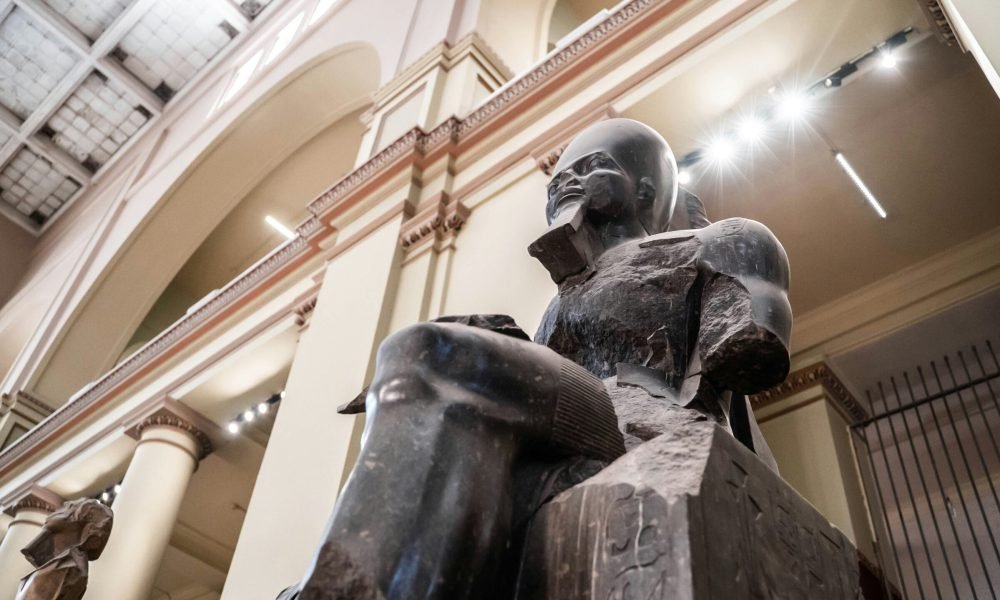
The Grand Egyptian Museum displays Egypt’s ancient treasures in a stunning modern building by the Pyramids. Unsplash
10. Visit the Grand Egyptian Museum (GEM) – Ancient Meets Futuristic
Located near the famous Giza Pyramids, the Grand Egyptian Museum (GEM) gives a fresh way to explore Egypt’s ancient history by combining old treasures with modern technology and design. Designed to be the largest archaeological museum in the world, GEM blends cutting-edge architecture with ancient treasures in a space that feels both monumental and modern.
Visitors can explore over 100,000 artifacts, including the complete collection of King Tutankhamun’s tomb, many of which will be on public display for the first time. The building’s sleek, light-filled design includes panoramic views of the pyramids and vast galleries that bring Egypt’s history to life through interactive technology and immersive exhibits.
Fact: A unique feature of the museum is its alabaster-covered facade, designed with triangular shapes that perfectly line up with the pyramids’ axis, symbolizing a bridge between Egypt’s ancient past and its future. Beyond being a museum, GEM serves as a vibrant cultural hub that transforms how we engage with Egypt’s enduring heritage.
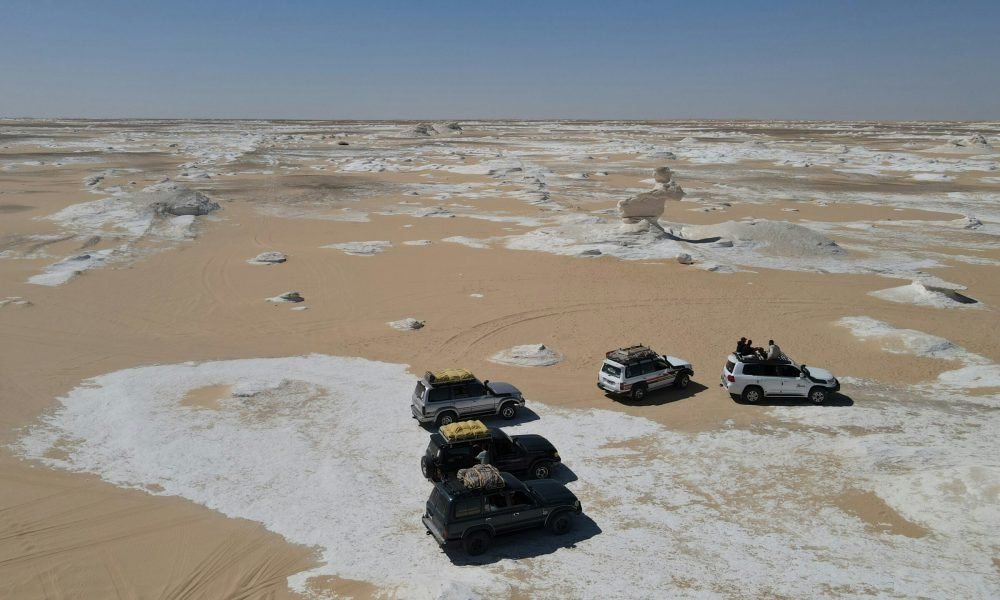
The White Desert dazzles with its surreal, chalk-white rock formations sculpted by nature’s winds. Ahmed Azab / Unsplash
11. Experience a White Desert Safari in Farafra
Venturing into the White Desert near Farafra is like stepping onto another planet, where surreal landscapes of chalk-white rock formations rise dramatically against the endless desert sands. This otherworldly environment, shaped over millennia by wind and sand, offers a breathtaking contrast to the more familiar golden dunes of Egypt.
A safari here typically includes a thrilling 4×4 ride, camping under a blanket of stars, and witnessing the desert’s magical silence at sunrise and sunset. What makes the White Desert truly unique is its bizarre natural sculptures: mushroom-shaped rocks, towering pillars, and abstract shapes carved by nature that seem almost sculpted by an artist’s hand.
Fact: The White Desert’s striking white color comes from the high concentration of chalk and calcium carbonate in the soil, which reflects sunlight and creates its glowing appearance. Exploring Farafra’s White Desert is an unforgettable adventure, offering both tranquility and a glimpse into the earth’s ancient geological artistry.
12. Soak in Natural Hot Springs at Siwa Oasis
Nestled in the heart of Egypt’s Western Desert, Siwa Oasis offers a serene escape filled with natural wonders, including its famous hot springs. These warm, mineral-rich waters have been cherished for centuries, believed to possess healing properties that soothe both body and mind.
Bathing in the hot springs provides a unique opportunity to relax amid the oasis’s stunning palm groves and tranquil desert landscape. Beyond their therapeutic benefits, the springs are also a cultural hub where locals and visitors alike gather, sharing stories and traditions passed down through generations.
Fact: The warm waters of Siwa’s hot springs come from natural geothermal sources deep beneath the desert, keeping them soothingly warm throughout the year. Soaking here refreshes both body and spirit while giving a glimpse into the timeless culture of this secluded desert oasis.
13. Camp Under the Stars with Bedouins in the Sinai Desert
Spending a night camping with Bedouin tribes in the Sinai Desert is an unforgettable experience that immerses you in ancient traditions and natural beauty. As the sun sets behind rugged mountains, the vast desert sky transforms into a dazzling canopy of stars, far from the city’s light pollution.
Bedouin hosts welcome you with warm hospitality, sharing stories around a crackling fire, serving traditional food, and giving tea brewed with fragrant herbs. The simple, rustic tents provide shelter but allow you to feel fully connected to the desert’s silence and vastness.
Fact: Bedouins have navigated the Sinai for thousands of years using the stars as their guide, relying on constellations like Orion and the Big Dipper to find their way through the desert’s shifting sands. Camping with them not only gives a night of peaceful reflection but also a rare glimpse into a resilient culture that has thrived in one of the world’s most challenging environments.
14. Dive or Snorkel in the Red Sea at Dahab or Sharm El Sheikh
The Red Sea, with its crystal-clear waters and vibrant coral reefs, offers some of the world’s best diving and snorkeling experiences, particularly at popular spots like Dahab and Sharm El Sheikh. Beneath the surface, you’ll discover a colorful underwater world teeming with exotic marine life, from graceful sea turtles and playful dolphins to schools of shimmering tropical fish and intricate coral gardens.
Dahab’s Blue Hole is famous among divers for its dramatic underwater sinkhole, while Sharm El Sheikh boasts the stunning Ras Mohammed National Park, known for its diverse ecosystems and impressive coral walls.
Fact: The Red Sea’s high salinity and warm temperatures create ideal conditions for coral growth, resulting in reefs that are among the most resilient and biodiverse on the planet. Whether you’re a seasoned diver or a beginner snorkeler, exploring these underwater wonders promises an unforgettable adventure full of natural beauty and vibrant life.
15. Kite Surf or Relax at El Gouna’s Stylish Beaches
El Gouna, often called the “Venice of the Red Sea,” is a chic resort town famous for its stunning beaches and vibrant watersports scene. Whether you’re an adrenaline seeker or simply looking to unwind, El Gouna offers the perfect blend of excitement and relaxation. Its steady winds and warm, clear waters create ideal conditions for kitesurfing, attracting enthusiasts from around the world.
Fact: El Gouna is a sustainable town designed with eco-friendly principles, including solar-powered buildings and extensive water recycling systems, making it a pioneer in environmentally conscious tourism in Egypt. Visiting El Gouna lets you enjoy modern luxury while connecting with nature in a responsible way.
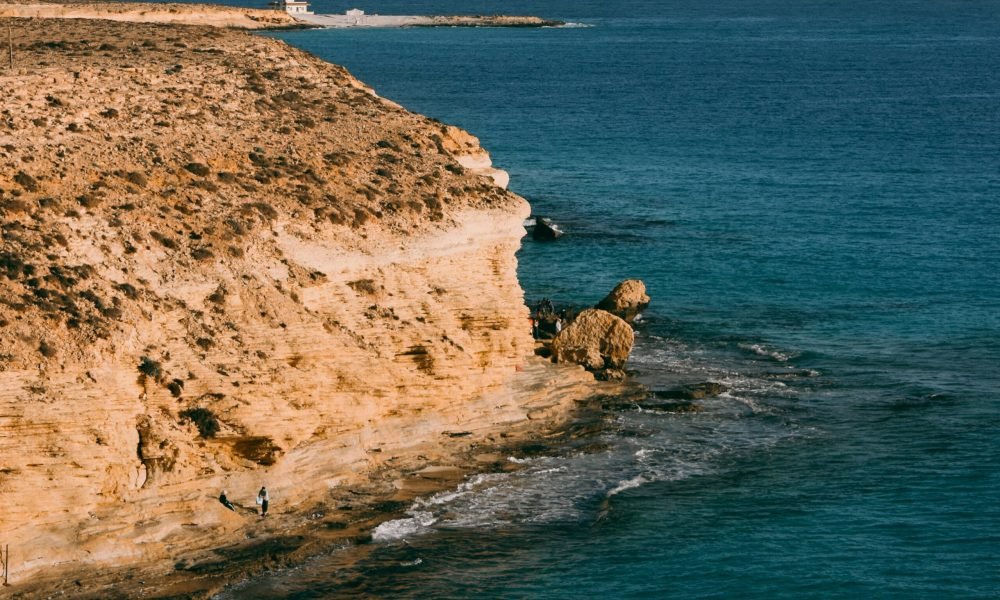
Marsa Alam is a tranquil Red Sea paradise known for its pristine beaches and vibrant marine life. Nader Ayman / Unsplash
16. Unwind in the Tranquil Charm of Marsa Alam
Hidden along Egypt’s Red Sea shoreline, Marsa Alam is a serene getaway famous for its pristine beaches and sparkling clear waters. Unlike the busier resort towns, Marsa Alam offers a quiet escape where you can relax on soft sandy shores, swim alongside vibrant coral reefs, or simply soak up the serene desert backdrop. The area is also a gateway to the famous Wadi El Gemal National Park, home to rare wildlife and stunning natural scenery.
Fact: Marsa Alam is one of the few places in the world where you can encounter the endangered dugong, a gentle marine mammal often called the “sea cow,” which peacefully grazes in its coastal waters.
17. Explore the Ancient Catacombs of Kom El Shoqafa in Alexandria
Hidden beneath the bustling streets of Alexandria lies one of Egypt’s most fascinating archaeological treasures, the Catacombs of Kom El Shoqafa.
As you descend the spiral staircase into the multi-level burial site, you’ll find carved chambers, statues, and sarcophagi decorated with a fusion of mythological motifs and cultural symbols. One of the most striking features is the Hall of Caracalla, believed to have been a mass burial site for humans and horses.
Fact: The catacombs came to light in 1900 when a donkey vanished into a hole in the ground, revealing the entrance to this vast underground burial site. Exploring Kom El Shoqafa gives a rare glimpse into a world where Egyptian, Greek, and Roman cultures intertwined in stone beneath Alexandria’s streets.
18. Walk Through the Painted Streets of Al-Qasr in Dakhla Oasis
As you wander its narrow, shaded streets lined with mudbrick houses, you’ll see intricate wooden lintels inscribed with Islamic calligraphy and colorful painted walls that reflect the village’s rich cultural heritage.
Once a medieval Islamic settlement, Al-Qasr still preserves centuries-old structures like mosques, schools, and homes built using traditional desert architecture. It shows how people in the desert lived comfortably by using natural materials and clever building methods.
Fact: The village’s wooden doors were crafted from repurposed palm trunks and inscribed with Quranic verses, some of which date back over 800 years, making them some of the oldest surviving Islamic wooden carvings in Egypt.
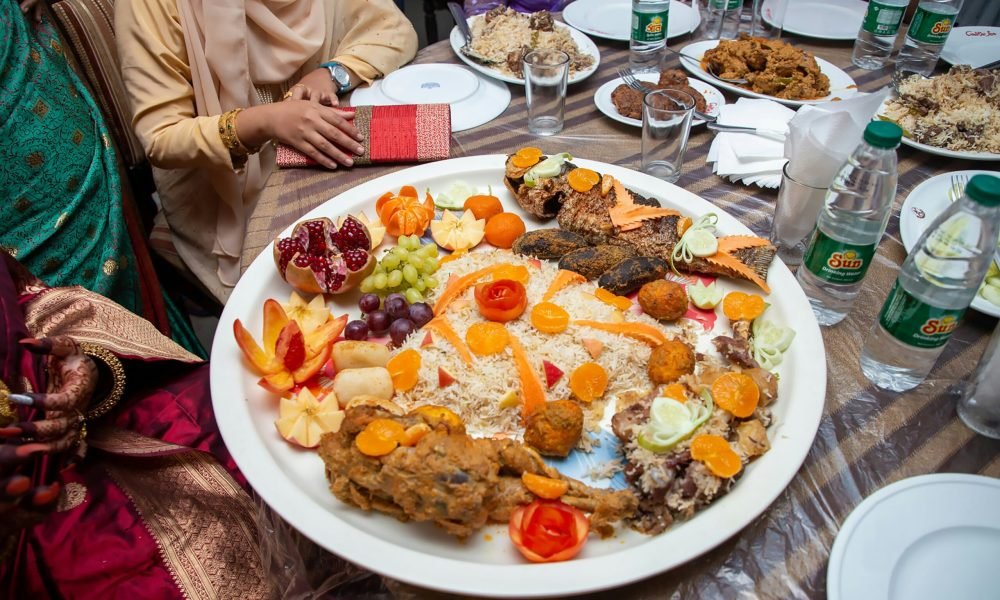
Join a cooking class with a local family in Luxor or Aswan to savor authentic Egyptian flavors and traditions. Md-Shahin / Unsplash
19. Take a Cooking Class with a Local Family in Luxor or Aswan
Joining a local family in Luxor or Aswan for a cooking class is more than just learning recipes; it’s a warm invitation into the heart of Egyptian hospitality. In a cozy home kitchen, you’ll discover how to prepare traditional dishes like molokhia, stuffed vine leaves, or freshly baked baladi bread, using age-old techniques passed down through generations.
As you chop, stir, and season side by side, you’ll hear stories about daily life, culture, and food traditions that connect families across the country.
Fact: In many Upper Egyptian homes, bread is still baked in a clay oven known as a furn, an ancient method dating back to Pharaonic times that gives the bread its signature flavor and texture. Sharing this meal at the end of the lesson creates not only a delicious memory but also a meaningful connection with a local way of life.
20. Attend a Sufi Whirling or Traditional Music Performance
Performed by dervishes dressed in vibrant, flowing robes, the dance represents a form of meditation, spinning in harmony with live music and rhythmic chants to achieve a deeper connection with the divine.
These performances, often held in historic venues like Cairo’s Wekalet El Ghouri, blend sacred movement with mesmerizing drumbeats, flutes, and traditional instruments that echo centuries-old practices.
Fact: Unlike the more silent Sufi whirling in Turkey, Egypt’s Tanoura dance incorporates bright colors and storytelling through movement, with each spin symbolizing the universe and the dancer’s journey through the spiritual world. Attending a performance offers not just entertainment but a powerful glimpse into Egypt’s mystical and musical heritage.
The official website for exploring the best things to do in Egypt is Visit Egypt. Operated by Egypt’s Ministry of Tourism and Antiquities, this site offers comprehensive travel information.
GUIDED BY EXPERT
Yoga within Travel the perfect flow of Experience
Explore wellness in anywhere
by

Explore Related Articles
LEAVE A COMMENT
Error: Contact form not found.