@ Yash Rai

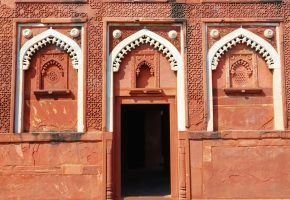
Agra Fort
Delhi,
U. Pradesh,
India,
Asia
Agra Fort stands as a symbol of the mighty Mughal Empire. While the Taj Mahal narrates a tale of eternal love, Agra Fort speaks of conquests, ambition, and the relentless spirit of emperors who once ruled from within its mighty walls.
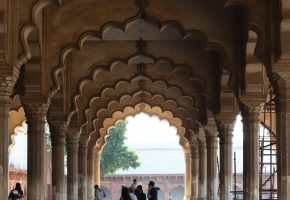
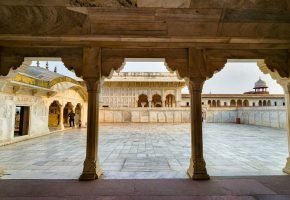
Agra Fort, a UNESCO World Heritage Site, is a stunning red sandstone fortress located in Agra, Uttar Pradesh, India. Situated on the right bank of the Yamuna River, just 2.5 km northwest of the world-famous Taj Mahal, this grand fort is an architectural masterpiece built during the Mughal era. It is easily accessible from all parts of Agra, with the Taj Mahal being just a short drive away. Originally constructed as a military fortification, it later evolved into a lavish royal residence and center of administration for the Mughal emperors.
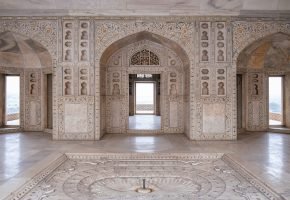
The fort was first built by Raja Badal Singh in the 11th century, but its most significant transformation occurred under Emperor Akbar in 1565. His successors, particularly Shah Jahan, further enhanced its beauty by incorporating white marble structures, making it an exquisite blend of Rajput and Mughal architecture.
Agra Fort is not just a historical monument but a massive fortress that stands as a testament to the grandeur and strategic brilliance of the Mughal era. Covering an impressive 94 acres, the fort has a semi-circular shape and is enclosed by towering 70-foot-high walls, making it one of the most formidable structures in India. Made from red sandstone, the fort was built to be both a royal palace and a strong military base. Its large size and solid structure made it a powerful and secure place for the Mughal rulers. The fort has four main entry gates, with the Delhi Gate being the most significant due to its grand design and historical importance. However, the Amar Singh Gate is now the designated entrance for visitors.
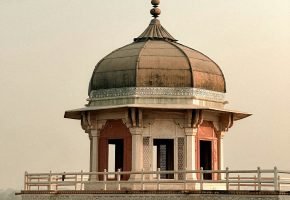
One of the most fascinating transformations of Agra Fort took place under Emperor Shah Jahan, who infused elements of elegance into its rugged structure by adding delicate white marble palaces. Among these is the Musamman Burj, a beautiful marble tower with intricate carvings and a breathtaking view of the Taj Mahal. Ironically, this very tower became Shah Jahan’s prison when he was confined there by his son Aurangzeb, spending his last years gazing at the Taj Mahal from afar.
Adding to the mystery of Agra Fort are its hidden tunnels and secret passages, which are believed to have once connected the fort to the Taj Mahal, Fatehpur Sikri, and other significant locations. While some of these tunnels have collapsed or remain inaccessible, their existence fuels curiosity among historians and travelers alike.
With the decline of the Mughal Empire, Agra Fort fell into the hands of the British in the 19th century, who repurposed it as a military base. They made modifications to the fort and destroyed some of its original Mughal structures, leaving behind remnants of colonial influence. Despite these changes, Agra Fort remains an architectural marvel, echoing tales of war, royalty, betrayal, and resilience—making it one of the most fascinating historical sites in India.
Let's Connect With
The official information about Agra Fort is available on the Taj Mahal’s official website.
Around Agra Fort
1. Taj Mahal
2.5 km
One of the Seven Wonders of the World, known for its breathtaking white marble beauty.
3. Mehtab Bagh
6 km
A garden giving the best sunset views of the Taj Mahal from across the Yamuna River.
4. Itmad-ud-Daulah’s Tomb (Baby Taj)
4 km
A beautiful white marble tomb often considered a draft of the Taj Mahal.
6. Akbar’s Tomb (Sikandra)
13 km
The grand tomb of Emperor Akbar, featuring stunning Mughal architecture.
7. Fatehpur Sikri
40 km
A UNESCO World Heritage Site, once the capital of the Mughal Empire under Akbar.
8. Bharatpur Bird Sanctuary
55 km
A UNESCO-listed bird sanctuary, perfect for nature enthusiasts.