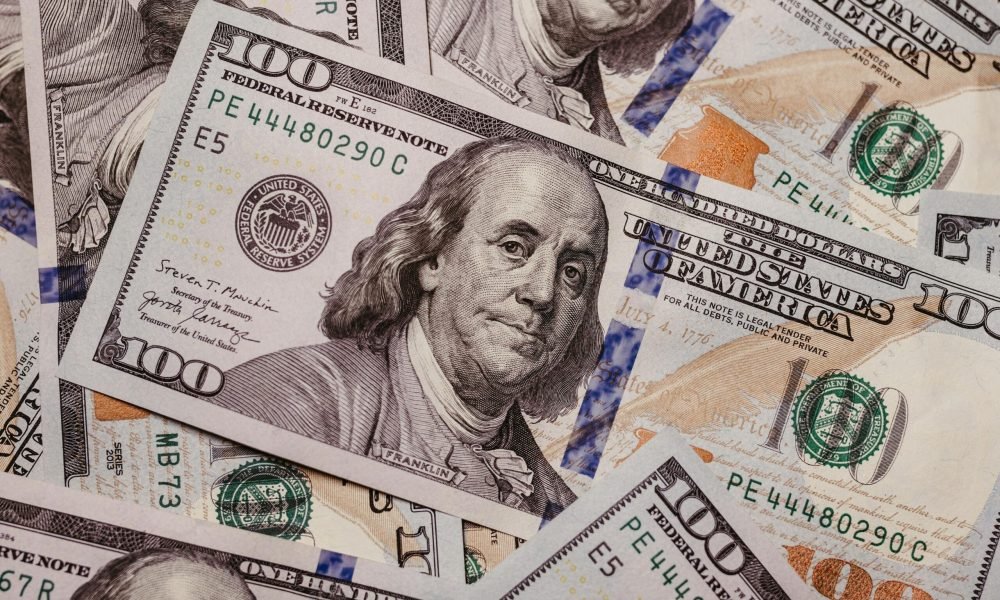
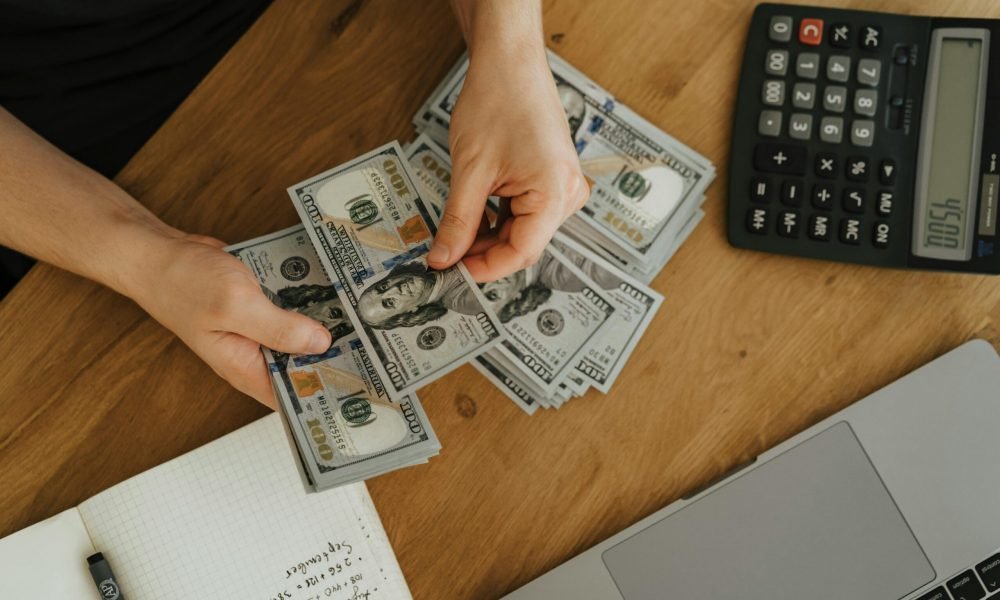
What makes United States currency truly special is how it blends beauty with meaning. Navlakha / Pexels
When you visit the U.S., knowing how the money system works isn’t just helpful; it makes daily things like shopping, tipping, or paying bills much easier.
United States currency has a unique look: coins like pennies and quarters vary in size and design, while paper bills feature famous figures like George Washington or Benjamin Franklin.
Simple things like buying coffee or tipping a server become smoother when you understand small denominations and local customs. Americans often say “bucks” instead of “dollars,” so it helps to know the slang too.
This guide helps you get comfortable with U.S. currency so you can spend smart, tip right, and enjoy your trip without money worries. Here everything you need to know about United States currency.
The U.S. dollar dominates global trade and is the world’s top reserve currency. Kamaji Ogino / Pexels
1. What Makes the U.S. Dollar Stand Out Globally?
The U.S. dollar isn’t just America’s currency; it’s the world’s go-to money. Many countries use it for international trade and oil deals and even keep it in their central banks as a backup reserve. That’s because people around the world trust the U.S. economy to be strong and stable.
When there’s a global crisis or market crash, investors often turn to the dollar as a “safe haven” because it holds its value better than other currencies. Also, the U.S. has one of the largest economies and a powerful financial system, which makes the dollar easy to use and widely accepted in global markets.
2. A Quick Look at U.S. Coins and Bills
U.S. money comes in both coins and paper bills, each with its size, color, and design. The coins start with the penny (1 cent), which is copper-colored and shows Abraham Lincoln.
Next is the nickel (5 cents) with Thomas Jefferson, followed by the dime (10 cents), which shows Franklin D. Roosevelt, and then the quarter (25 cents) featuring the face of George Washington. There’s even a larger coin called the half dollar and a golden-colored $1 coin.
Paper bills in the U.S., known as banknotes, start at $1, which features George Washington. As the values go up $5, $10, $20, $50, and $100, you’ll see different well-known American leaders, such as Abraham Lincoln on the $5, Alexander Hamilton on the $10, and Benjamin Franklin on the $100. Each bill has its design and security features, but their sizes stay the same, which makes the details even more important to recognize.
They all have a greenish color, which is why dollars are sometimes nicknamed “greenbacks.” Fun fact is all U.S. bills look similar at first glance, but each one has hidden security features like watermarks and color-shifting ink to prevent counterfeiting.
3. Currency Security Features: How to Spot a Fake
U.S. paper money might look simple, but it’s packed with smart security features to stop fake notes from spreading. If you hold a real bill up to the light, you’ll often see a thin security thread running through it and a watermark, a faint image that matches the portrait on the front.
One unique detail is the special ink used on the bottom-right number of larger bills like $10, $20, or $100; it changes color when you move the bill. Gently tilt the bill, and the number in the corner changes from copper to green, one of the easiest ways to spot a genuine note.
The texture of the paper also feels different. The U.S. prints real bills on a special cotton-linen blend, not regular paper, and you can feel raised ink in certain areas. These subtle features make it easier to detect fake bills and protect the integrity of the U.S. currency system.
4. The Role of the Federal Reserve in Printing Money
The Federal Reserve, also known as the Fed, is the central bank of the United States, and it plays a major role in controlling the flow of money in the country. But here’s the thing: it doesn’t actually print the money; that job goes to the Bureau of Engraving and Printing.
What the Fed does is decide how much money should be in circulation based on the economy’s needs. If the economy is slow, the Fed might release more money to encourage spending. However, printing too much money can lead to inflation when prices rise and the value of your money doesn’t stretch as far.
That’s why the Fed carefully studies data, like job rates and inflation, to avoid flooding the economy with cash. It’s all about keeping a healthy balance—enough money for growth, but not so much that it loses value.
Need to know about United States currency with a little planning, managing money in the U.S. becomes stress-free and smooth. Jonathan Borba / Pexels
5. How Tourists Can Handle U.S. Money Easily
If you’re visiting the U.S. for the first time, handling money might feel a bit confusing at first, but once you get the basics, it’s pretty simple. Tipping is a big part of American culture, especially in restaurants, bars, and taxis.
Usually, people tip around 15% to 20% of the bill, so it’s good to keep small bills like $1s and $5s handy. Most places in the U.S. accept credit and debit cards, even for small purchases, and contactless payments like Apple Pay or Google Pay are becoming more common.
But you might still come across cash-only spots, like small diners, food trucks, or roadside stands, so keeping a little cash with you is smart. ATMs are easy to find but check if your card works internationally and watch for extra fees. With a little planning, managing money in the U.S. becomes stress-free and smooth.
6. Strange Facts About American Money
American money isn’t just for spending; it’s full of quirky history and hidden surprises. Did you know the U.S. once had a $1,000 bill? It featured President Grover Cleveland and was mainly used for bank-to-bank transfers, not by everyday people.
But in 1969, the government stopped making high-denomination bills like the $500, $1,000, and even $10,000 notes because electronic banking made them unnecessary and they were too risky if stolen.
Another fun fact is some people claim there’s a tiny spider hidden in the corner of the $1 bill, near the top right of the shield. Others say it’s an owl. No one knows for sure, but it’s one of those little mysteries that makes American currency fun to explore. So, beyond the numbers and faces, U.S. money has a few secrets worth noticing!
7. Digital Payments and the Shift Toward a Cashless USA
In the U.S., more and more people are moving away from paper money and choosing digital payments instead. Whether it’s Apple Pay, Google Pay, or popular apps like Venmo, paying with a phone has become super common, especially in cities.
Even small stores, food trucks, and farmers’ markets often accept contactless payments or card swipes. Credit and debit cards are still widely used, and many Americans don’t carry much cash at all anymore. This shift to cashless payments is about convenience, speed, and safety; you don’t need to count bills or worry about change.
For tourists, this means having a working international card or a digital wallet can make spending in the U.S. much easier than relying only on cash. The country isn’t fully cashless yet, but it’s definitely headed in that direction.
Need to know about Unites States currency, it ended high-value bills as electronic payments grew, and theft risks increased. Olia Danilevich / Pexels
8. State Quarters and Collectible Coins
U.S. coins aren’t just for spending; they often tell stories about the country’s history, people, and places. One of the best examples is the State Quarters Program, which ran from 1999 to 2008.
During this time, each of the 50 U.S. states had its own unique quarter design, showing something special about its culture or history, like landmarks, events, or famous people.
These coins became super popular, and many people started collecting them as souvenirs or keepsakes. The U.S. Mint later added more series, like the America the Beautiful quarters, which highlight national parks and historic sites.
There are also collectible coins released in limited editions, including ones made with silver or gold. For travelers and coin lovers, these coins are more than just money; they’re little pieces of American heritage you can hold in your hand.
9. Money Slang You’ll Hear in the U.S.
In everyday conversations, Americans rarely use the word “dollars” in the formal way. Instead, they have a lot of fun and casual slang for money. The most common is “bucks,” so if someone says, “It’s 10 bucks,” they mean $10.
A “grand” means a thousand dollars, often used when talking about big purchases, like “That phone cost me two grand.” For $100, people sometimes say “a Benjamin” because Benjamin Franklin’s face is on the $100 bill.
You might also hear “fiver” for a $5 bill or “tenner” for a $10. These phrases might sound strange at first, but they’re part of everyday life in the U.S., and knowing them helps you blend in and understand what people are really saying when they talk about money.
10. Exchange Tips for International Travelers
If you’re traveling to the U.S. from another country, exchanging your money the right way can save you a lot. One smart tip is to avoid airport exchange counters; they’re quick, but the rates are usually high and not in your favor.
Instead, it’s better to exchange a small amount just for emergencies and then use ATMs once you’re in the city. ATMs often give better rates, especially if you’re using a debit card from a major international bank. Check for withdrawal fees and notify your bank about your travel plans to avoid getting your card blocked.
You can also use currency exchange services at trusted banks or use digital travel cards that offer real-time conversion rates with low fees. Planning ahead and knowing where to exchange your money can make your dollars go further during your trip.
Official United States government websites
Everything You Need to Know About United States Currency
This site is managed by the U.S. Department of the Treasury’s Bureau of Engraving and Printing. It provides detailed information about U.S. banknotes, security features, design changes, and how to spot counterfeit bills. https://www.uscurrency.gov/
FAQs
1. What happens if I damage or tear a U.S. bill?
As long as over half the bill is intact, most stores will still accept it. You can also exchange it at a U.S. bank or through the Bureau of Engraving and Printing.
2. What coins are commonly used in the U.S.?
Common coins include the penny (1¢), nickel (5¢), dime (10¢), and quarter (25¢).
3. What paper bill denominations are in circulation?
Bills come in $1, $5, $10, $20, $50, and $100 denominations. Larger bills like $500 or $1,000 are no longer in use.
4. Can tourists use foreign currency in the U.S.?
No, only U.S. dollars are accepted. You’ll need to exchange your money or use an international card.
5. Are credit and debit cards widely accepted?
Yes! Most places accept Visa, Mastercard, American Express, and Discover. Even small shops often take cards or digital payments.
6. How much should I tip in the U.S.?
Tipping is standard. In restaurants, it’s common to leave 15–20% of the bill. Tips are also expected in taxis, salons, and for hotel staff.
7. Are there counterfeit bills in circulation?
Counterfeit notes exist, but real bills have security features like color-shifting ink, watermarks, and unique textures to help spot fakes.
8. Can I use digital wallets like Apple Pay or Google Pay?
Yes! Contactless payments are widely accepted in stores, restaurants, and even vending machines.
9. Where should I exchange foreign currency?
Avoid airport counters. Instead, use ATMs, local banks, or trusted exchange services for better rates.